Mayo...
- luaemp
- 3 de jul. de 2024
- 10 min de leitura
Atualizado: 8 de jul. de 2024
(Followed by the English version at the end)
Prosseguindo no Wild Atlantic Way…
Visitei o County Mayo, um dos maiores em termos de área, no final do ano passado (2023). Situado na província de Connacht, o nome "Mayo" vem do gaélico "Maigh Eo", que significa "planície dos teixos". Teixos são árvores ou arbustos coníferos pertencentes ao género Taxus, sendo que o Taxus baccata (Teixo-Europeu) é a espécie mais comum. Estas árvores podem ter milhares de anos e, por esse motivo têm, em muitas culturas, uma simbologia riquíssima associada à longevidade e à imortalidade.

(Imagem retirada de AtlasObscura)
Duas das cidades mais importantes de Mayo e as que tive oportunidade de visitar, são Castlebar e Westport. Castlebar, a capital do condado, é um centro administrativo e comercial com uma história rica. O nome "Castlebar" vem do irlandês "Caisleán an Bharraigh", que significa "Castelo de Barry", referindo-se a um castelo mandado construir no século XIII por um membro da família Barry, uma família normanda que se estabeleceu na região. Mas não venham em busca desse castelo pois, embora historicamente tenha existido, não sobraram vestígios físicos significativos do dito cujo.

(Imagem retirada de Achill Tourism)
A cidade é, talvez, mais conhecida pela Batalha de Castlebar travada em 1798, que marcou uma vitória significativa das forças irlandesas e francesas sobre as tropas britânicas durante a Rebelião Irlandesa. Lideradas pelo general francês Jean Joseph Amable Humbert, as forças combinadas conquistaram Castlebar, causando uma retirada desordenada das tropas britânicas.
Já Westport é conhecida pela beleza da sua arquitectura georgiana e pela intensa vida cultural. Projectada no século XVIII, Westport é frequentemente reconhecida como uma das cidades mais bonitas da Irlanda e um destino imperdível para os visitantes.

(Imagem retirada de Irish Independent)
Não tive tempo para visitar Achill Island, a maior ilha da Irlanda, perto das cidades de Westport e Castlebar. A ilha é acessível de carro através da ponte Michael Davitt, localizada em Achill Sound, que a liga ao continente.
Em breve, espero eu, vos trarei mais notícias sobre esta ilha deslumbrante e famosa pela variada combinação de praias, montanhas e falésias.
Os pontos mais icónicos e que constam da minha lista:
Keem Bay: Uma das praias mais bonitas da Irlanda, conhecida pelas suas águas cristalinas e areias douradas, ideal para nadar e relaxar.


(Imagem retirada de Irish Independent)
Slievemore Mountain: Uma montanha majestosa repleta de trilhos para caminhadas e vistas panorâmicas incríveis. No sopé da montanha, encontram-se as ruínas da Aldeia Abandonada (Deserted Village), cerca de 80 casas de pedra que foram abandonadas durante a Grande Fome.

(Imagem retirada de Achill Tourism)
Atlantic Drive: Uma estrada cénica (com cerca de 55 Km) que começa em Mulranny e percorre a costa da ilha, proporcionando vistas espetaculares do Oceano Atlântico e das falésias.


(Imagens retiradas de Achill Tourism)
Ceide Fields: é um sítio arqueológico extraordinário, descoberto por acaso em 1930, localizado numa vila de Ballycastle, não muito distante das cidades de Westport e Castlebar. Este complexo de campos agrícolas pré-históricos remonta aproximadamente 5.000 anos, sendo um dos mais antigos da Europa, e um destino imperdível. Possui um centro que proporciona informações detalhadas sobre a história e a arqueologia do local a quem o visita.

(Imagem retirada de Curious Ireland)
Quem sabe se não irei espreitar o Parque Nacional de Ballycroy, um dos seis parques nacionais da Irlanda, conhecido pela sua vasta área de turfas e, claro, pelo Mayo Dark Sky Festival, que se realiza anualmente em Novembro. Este festival destaca a beleza do céu nocturno de Mayo, que, fiquem sabendo, possui uma das áreas de céu escuro mais protegidas da Europa. O evento decorre em várias localidades, principalmente nas vilas de Newport, Mulranny e Ballycroy. Estas vilas estão situadas perto do Parque Nacional de Ballycroy e da Wild Nephin Wilderness, áreas que possuem certificação de "Dark Sky Park" devido à qualidade excepcional de céu nocturno.
O festival integra palestras, workshops de astrofotografia, observações de estrelas e actividades para todas as idades. Foi por um triz que o perdi no ano passado, mas já está na minha agenda:
em 2024 será de 1 a 3 de Novembro (confirmem aqui).

(Imagem retirada de The Ellison)
Como sabem música e pubs não faltam neste país e o County Mayo não é excepção. Westport, organiza vários festivais ao longo do ano, como o Westport Folk and Bluegrass Festival, normalmente realizado em Junho o Westport Arts Festival (Julho). Esses eventos celebram tanto a cultura local quanto a internacional. Tal como o nome indica, Castlebar Blues Festival é um festival de blues que acontece ano após ano em Junho atraindo fãs e músicos de blues de todo o mundo e é composto por diversos concertos em diferentes locais da cidade. Independentemente da época do ano em que decidam ir, têm sempre o Royal Theatre que é um importante centro cultural que possui uma variedade de eventos musicais e teatrais ao longo do ano. Desde concertos de grandes nomes da música até produções teatrais e shows de comédia.
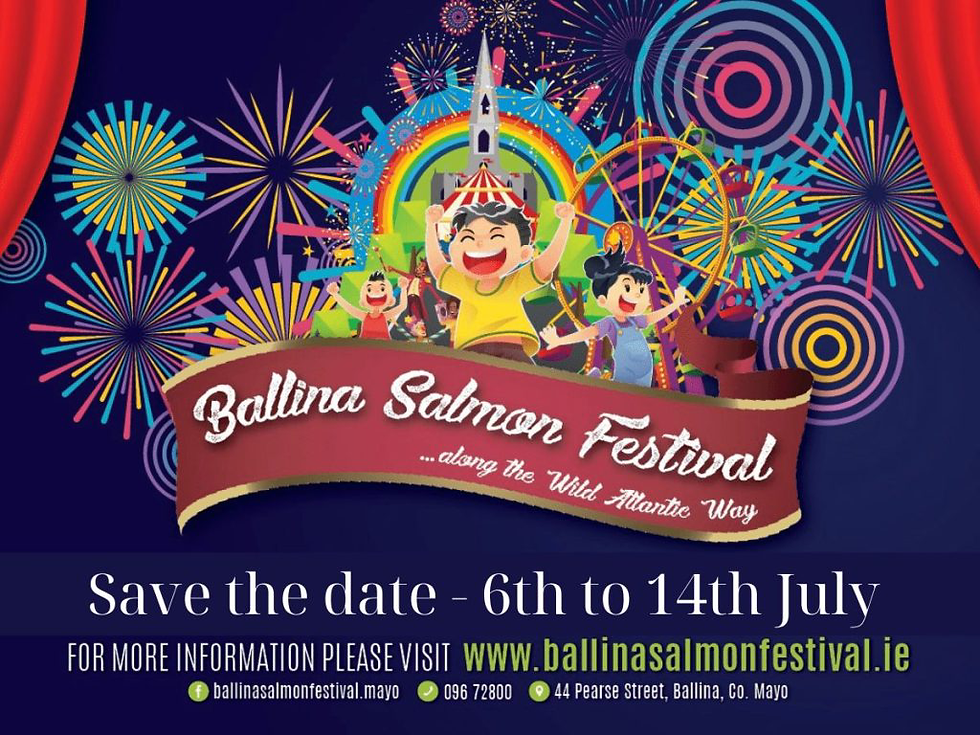
Mais a norte do Condado, na bonita cidade de Ballina, realiza-se um dos festivais mais antigos e maiores do oeste da Irlanda, realizado em julho, o Ballina Salmon Festival. Neste evento de uma semana, celebra-se a importância histórica da pesca de salmão para a região com desfiles, música ao vivo e competições de pesca.

Da única vez que lá estive, aproveitei para dar um saltinho a Killala e ver a sua torre redonda (Killala Round Tower) do século XII.

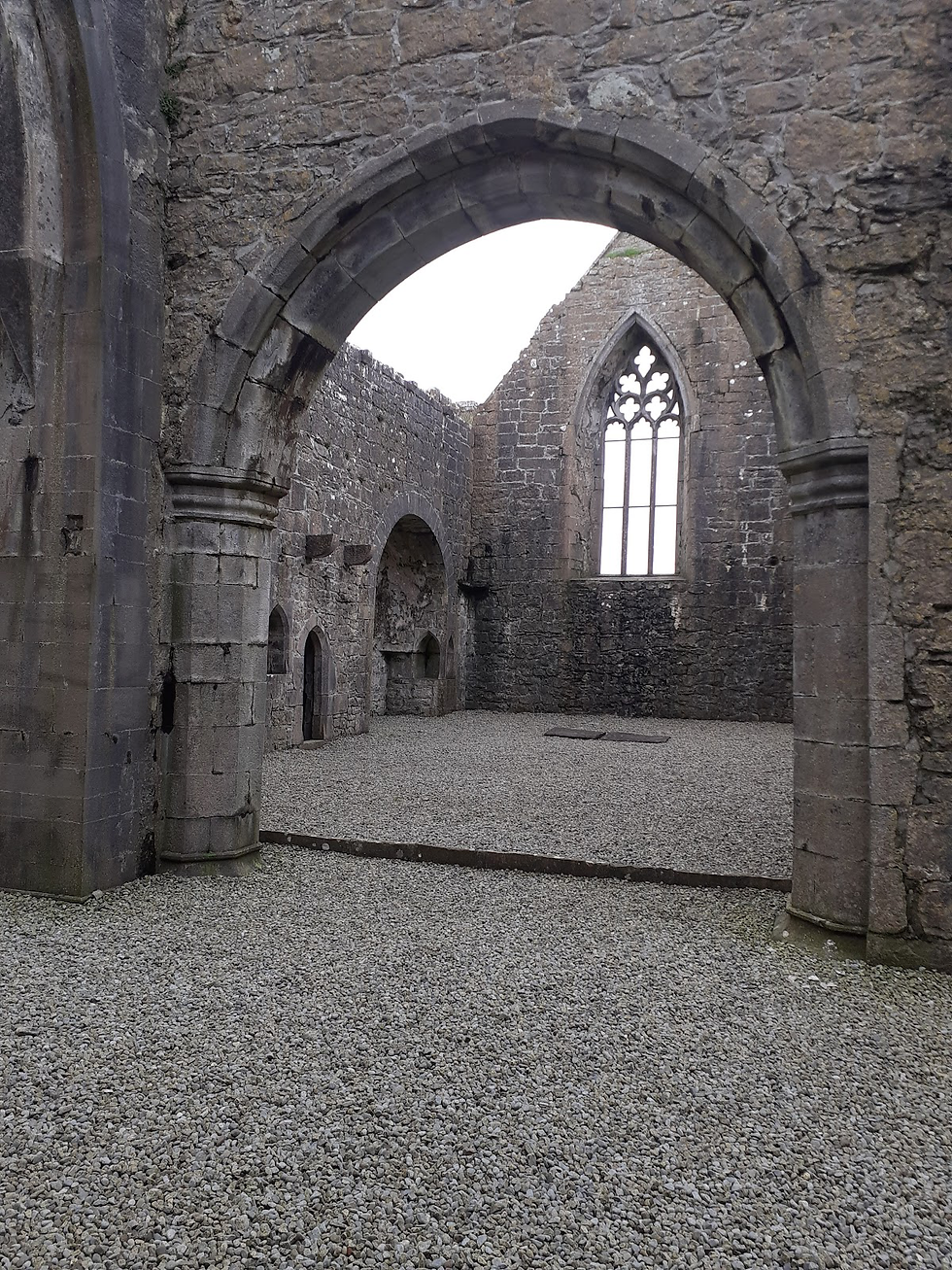
Assim como me deixei deslumbrar pelas ruínas do mosteiro Rosserk Friary, fundado pela Ordem Franciscana.


Bem, e não posso deixar de referir Knock. Primeiro porque tem um aeroporto pequeno (com apenas três gates), mas excelente em termos de preços, para se dar uma escapadela até à Escócia ou qualquer outro estado do Reino Unido.

Depois porque Knock apesar de ser uma vila pequena, é um dos destinos de peregrinação mais importantes da Irlanda e do mundo católico. Em 1879, quinze pessoas da vila testemunharam uma aparição da Virgem Maria, São José e São João Evangelista na parede da igreja paroquial. Desde então, Knock tornou-se um local de peregrinação e devoção.
O Santuário de Knock, O Knock Shrine, é o principal ponto de interesse na vila, atraindo mais de um milhão de peregrinos e visitantes todos os anos. O complexo do santuário inclui a Basílica de Nossa Senhora Rainha da Irlanda, a Igreja da Aparição, a Capela de Reconciliação e o Museu de Knock.

(Imagem retirada de Irish American)
É assim, mais ou menos, como Fátima em miniatura.
Por curiosidade o Aeroporto Internacional de Knock, oficialmente chamado de Aeroporto Internacional de Ireland West, teve como principal impulsionador o Padre James Horan, um padre devoto de Fátima que desempenhou um papel crucial na promoção e desenvolvimento do aeroporto para servir a região de Knock. A ideia seria um intercâmbio de peregrinos entre Fátima e Knock, mas ironicamente, única rota disponível deste aeroporto para Portugal é… Algarve (Faro)...🤷♀️
Curiosa é também a “taxa” que se tem que pagar de cada vez que se voa a partir deste aeroporto: 10€. C’os diabos, se à época, até se poderia achar uma ideia interessante para cobrir as despesas da sua construção, tantos anos depois não faz sentido algum…
Puseram-lhe o nome “fancy” de “Development Fee”, justificando-a como sendo necessária para financiar o desenvolvimento de infraestruturas, manutenção e projectos de melhoria.

Enfim, só Deus sabe para onde voa o dinheiro!
Sugestão final:
Se forem amantes de Natureza e caminhadas, não percam o International Four Day Walks em Castlebar, que decorre todos os anos em Julho (este ano entre 4 a 7). Espreitem aqui o programa oficial. É um festival de caminhadas que atrai participantes de todo o mundo para explorar a beleza natural do oeste da Irlanda. Durante este evento, Castlebar ganha vida com uma atmosfera vibrante e culturalmente diversa para todos os participantes.
English Version
Mayo...
Continuing along the Wild Atlantic Way…
I visited County Mayo, one of the largest in terms of area, at the end of last year (2023). Located in the province of Connacht, the name "Mayo" comes from the Gaelic "Maigh Eo," which means "plain of the yews." Yews are coniferous trees or shrubs belonging to the genus Taxus, with Taxus baccata (European Yew) being the most common species. These trees can live for thousands of years and, for this reason, have a rich symbolism associated with longevity and immortality in many cultures.

Two of the most important towns in Mayo, which I had the opportunity to visit, are Castlebar and Westport. Castlebar, the county's capital, is an administrative and commercial center with a rich history. The name "Castlebar" comes from the Irish "Caisleán an Bharraigh," meaning "Barry's Castle," referring to a castle built in the 13th century by a member of the Barry family, a Norman family that settled in the region. However, don't come looking for that castle because, although it historically existed, there are no significant physical remains of it.

The town is perhaps best known for the Battle of Castlebar fought in 1798, which marked a significant victory for the Irish and French forces over the British troops during the Irish Rebellion. Led by French General Jean Joseph Amable Humbert, the combined forces captured Castlebar, causing a disordered retreat of the British troops.
Westport, on the other hand, is known for the beauty of its Georgian architecture and its vibrant cultural life. Designed in the 18th century, Westport is often recognized as one of the most beautiful towns in Ireland and a must-visit destination for travelers.

I didn't have time to visit Achill Island, the largest island in Ireland, near the towns of Westport and Castlebar. The island is accessible by car via the Michael Davitt Bridge, located in Achill Sound, which connects it to the mainland. Hopefully, soon I will bring you more news about this stunning island, famous for its varied combination of beaches, mountains, and cliffs. The most iconic spots on my list include:
Keem Bay: One of the most beautiful beaches in Ireland, known for its crystal-clear waters and golden sands, ideal for swimming and relaxing.


Slievemore Mountain: A majestic mountain filled with hiking trails and incredible panoramic views. At the foot of the mountain are the ruins of the Deserted Village, about 80 stone houses that were abandoned during the Great Famine.

Atlantic Drive: A scenic road (about 55 km long) that starts in Mulranny and runs along the island's coast, providing spectacular views of the Atlantic Ocean and the cliffs.


Ceide Fields: An extraordinary archaeological site, accidentally discovered in 1930, located in the village of Ballycastle, not far from the towns of Westport and Castlebar. This complex of prehistoric agricultural fields dates back approximately 5,000 years, making it one of the oldest in Europe and a must-see destination. It has a center that provides visitors with detailed information about the site's history and archaeology.

Who knows, I might also visit Ballycroy National Park, one of Ireland's six national parks, known for its vast peatlands and, of course, the Mayo Dark Sky Festival, held annually in November. This festival highlights the beauty of Mayo's night sky, which, as you should know, has one of the most protected dark sky areas in Europe. The event takes place in various locations, mainly in the villages of Newport, Mulranny, and Ballycroy. These villages are near Ballycroy National Park and the Wild Nephin Wilderness, areas certified as "Dark Sky Parks" due to their exceptional night sky quality. The festival includes lectures, astrophotography workshops, star observations, and activities for all ages. I almost missed it last year, but it's already on my agenda: in 2024, it will be from November 1 to 3 (confirm here).

As you know, music and pubs are plentiful in this country, and County Mayo is no exception. Westport hosts several festivals throughout the year, such as the Westport Folk and Bluegrass Festival, usually held in June, and the Westport Arts Festival (July). These events celebrate both local and international culture. As the name suggests, the Castlebar Blues Festival is a blues festival that takes place annually in June, attracting blues fans and musicians from around the world with various concerts in different city venues. No matter the time of year you decide to visit, there's always the Royal Theatre, an important cultural center that hosts a variety of musical and theatrical events throughout the year, from concerts by big-name musicians to theatrical productions and comedy shows.
Further north in the county, in the beautiful town of Ballina, the Ballina Salmon Festival, one of the oldest and largest festivals in western Ireland, takes place in July. This week-long event celebrates the historical importance of salmon fishing to the region with parades, live music, and fishing competitions.
During my only visit, I took the chance to see Killala and its 12th-century round tower (Killala Round Tower).

I was also dazzled by the ruins of Rosserk Friary, founded by the Franciscan Order.


And I must mention Knock. First, because it has a small airport (with only three gates), but excellent in terms of prices, for a quick getaway to Scotland or any other part of the UK.

Then because, despite being a small village, Knock is one of the most important pilgrimage destinations in Ireland and the Catholic world. In 1879, fifteen people from the village witnessed an apparition of the Virgin Mary, Saint Joseph, and Saint John the Evangelist on the wall of the parish church. Since then, Knock has become a place of pilgrimage and devotion. Knock Shrine is the main attraction in the village, drawing over a million pilgrims and visitors annually. The shrine complex includes the Basilica of Our Lady, Queen of Ireland, the Apparition Chapel, the Chapel of Reconciliation, and the Knock Museum.

It's like a mini-version of Fátima.
Interestingly, the Knock International Airport, officially called Ireland West Airport, was mainly promoted by Father James Horan, a devout Fátima supporter who played a crucial role in promoting and developing the airport to serve the Knock region. The idea was to have an exchange of pilgrims between Fátima and Knock, but ironically, the only available route from this airport to Portugal is… the Algarve (Faro)...🤷♀️ Curiously, there's also a "fee" you have to pay each time you fly from this airport: €10. At the time, it might have seemed like an interesting idea to cover construction expenses, but so many years later, it makes no sense at all… They gave it the fancy name of "Development Fee," justifying it as necessary to fund infrastructure development, maintenance, and improvement projects.

Well, only God knows where the money goes!
Final suggestion: If you love nature and hiking, don't miss the International Four Day Walks in Castlebar, held every year in July (this year from the 4th to the 7th). Check out the official program here. It’s a walking festival that attracts participants from all over the world to explore the natural beauty of western Ireland. During this event, Castlebar comes alive with a vibrant and culturally diverse atmosphere for all participants.


Comentários