Choco-louca.../Choco-crazy...
- luaemp
- 16 de nov. de 2025
- 10 min de leitura
(Followed by the English version)

(Imagem retirada de National Geographic)
Entre a ressaca do Halloween e a antevisão do Natal, trago-vos um tema que combina perfeitamente com estas festividades — embora, para mim, tenha celebração garantida todos os dias do ano…
Um agradecimento genuíno à Theobroma cacao, nome científico da árvore que me proporciona incontáveis momentos de prazer e de pura gula — aliás, o nome Theobroma cacao vem do grego e significa literalmente ‘alimento dos deuses’ — e quem sou eu para discordar?

(Theobroma cacao)
Sim, senti-me compelida a escrever sobre um dos meus maiores prazeres: o chocolate — negro, de preferência…
Mas vamos por partes…
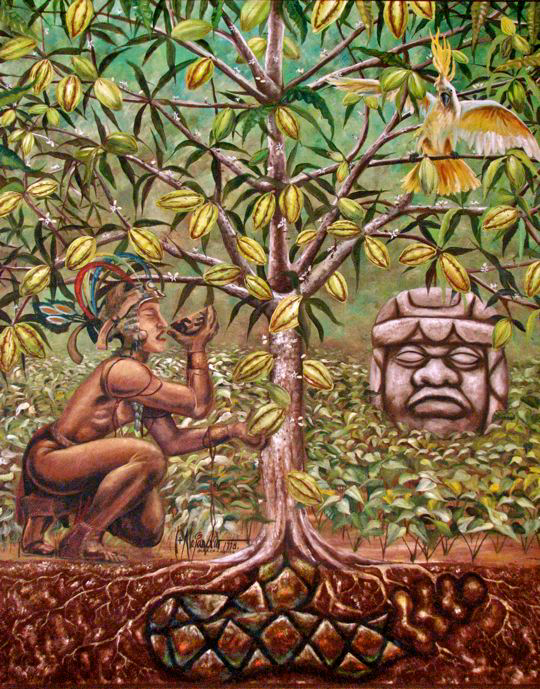
O chocolate nasceu muito antes de se tornar a barra doce ou o bombom elegante que conhecemos hoje. A sua história começa nas civilizações mesoamericanas — leram bem — há cerca de 3.000 anos, com os maias e os astecas, que cultivavam o cacau e preparavam uma bebida amarga chamada xocolātl, feita com grãos de cacau moídos, água, pimenta e outras especiarias. Para eles, o cacau não era apenas alimento: era sagrado — como eu os entendo! — usado em rituais e até como moeda.
Atalhando caminho — porque a história do chocolate é longa — avancemos um pouco…
Quando os exploradores espanhóis chegaram às Américas, no século XVI, trouxeram consigo o cacau — talvez sem imaginar o impacto que aquele grão amargo viria a ter. (Gracias a nuestros hermanos).
Na Europa, a bebida foi rapidamente adaptada ao gosto local: perdeu a pimenta, ganhou açúcar e, mais tarde, leite.
O resultado? Uma transformação completa — o amargo sagrado dos maias e astecas deu lugar ao doce irresistível que hoje reconhecemos como chocolate.
Ambos divinais… sem nada a obstar.
Ah e tal… o chocolate só faz mal… e tal…
Não digam asneiras…
O chocolate (principalmente chocolate negro) tem inúmeros benefícios para a saúde física e mental.
Primeiro porque é rico em antioxidantes — o cacau contém flavonoides, que ajudam a combater os radicais livres.
Pode contribuir para a protecção do coração, diminuindo a pressão arterial e melhorando a circulação.
Não esquecendo que há estudos que indicam que os flavonoides do cacau podem melhorar a função cognitiva: a memória e a atenção. Óptimo pretexto para aquele pequeno chocolate durante um dia de estudo ou trabalho intenso.
Também tem propriedades anti-inflamatórias: os antioxidantes ajudam a reduzir inflamações e podem beneficiar o sistema imunitário.
Melhora o humor — contém teobromina, pequenas doses de cafeína e compostos que estimulam a produção de serotonina e endorfinas. Um quadradinho de chocolate pode, literalmente, animar qualquer um.
E, notem bem: nem todo chocolate é inimigo da glicemia. Para quem tem diabetes, o segredo está no tipo de chocolate e na quantidade: o chocolate negro, rico em cacau e com baixo teor de açúcar, pode ser até amigo da saúde, ajudando na sensibilidade à insulina e sem disparar picos de glicemia — desde que consumido com moderação, claro.
Oh, vais-nos dizer que não tem malefícios, queres ver?
Bem, não que me importe muito com isso, até porque tudo na vida tem o reverso da medalha. Neste caso, o problema raramente está no cacau — está no que lhe juntam. Açúcar em excesso, gorduras estranhas, nomes complicados que ninguém consegue pronunciar e aquelas versões “de leite” que de chocolate só têm o nome — perdoai-lhes Senhor que não sabem o que fazem! — Claro que aí sim, já não há antioxidante que valha.
Mas convenhamos: é um preço pequeno a pagar por tanta felicidade concentrada num quadradinho.
Falando em quadradinho, como já disse acima, o chocolate, tal como o conhecemos hoje, foi desenvolvido por vários inovadores ao longo do tempo. Mas foi no século XIX que a revolução teve início. Primeiro com
François-Louis Cailler que fundou a primeira fábrica de chocolate mecanizada na Suíça em 1819, marcando o início da produção de chocolate sólido. Em 1847, o britânico Joseph Fry criou a primeira barra de chocolate sólida ao misturar cacau, açúcar e manteiga de cacau — o que revolucionou a forma como consumimos chocolate, tornando-o prático e portátil. Pessoalmente não encontro palavras para lhe agradecer.
Mais tarde, em 1875, Daniel Peter, também suíço, combinou leite condensado com chocolate, criando o chocolate de leite. Só lhe perdoo porque é a única forma das crianças serem iniciadas a este prazer.
Quanto aos bonbons tal como o nome indica, foram inventados no século XVII, na corte francesa. Mas calma, nessa época eles eram pequenos doces, geralmente feitos com amêndoas e cobertos de açúcar ou chocolate. Pequenas iguarias nobres.
O bonbon de chocolate, tal como o conhecemos hoje, foi refinado e elevado a outro nível por Jean Neuhaus II, um chocolatier belga. Em 1912, ele introduziu o conceito de rechear bonbons com cremes ou pastas, criando o que é conhecido como praliné, transformando um simples doce numa experiência gourmet, com chocolate de alta qualidade e recheios variados. — Fica a dica: se algum dia me quiserem oferecer bonbons, pelo amor da santa nunca me ofereçam pralinés.
Além deste senhor, outros mestres chocolatiers belgas, como Pierre Marcolini e Godiva, continuaram a aperfeiçoar o bonbon, consolidando a reputação belga nesta arte.
A Irlanda também tem a sua tradição, e não é pequena.
A Cleeve’s, fundada em 1882, no condado de Limerick, é a mais antiga fabricante de chocolate e doces do país, um verdadeiro marco da história alimentar irlandesa. Criada pelos irmãos Cleeve, tornou-se um nome icónico nas primeiras décadas do século XX, símbolo de um tempo em que o chocolate começava a ganhar o coração dos irlandeses.
Embora tenha passado por várias interrupções e mudanças de propriedade ao longo das décadas, a marca renasceu em 2018, mantendo o nome e o legado originais — Amen! Há coisas que simplesmente não deviam desaparecer.
Outra marca notável é a Butlers Chocolates, fundada em 1932 em Dublin. Conhecida pelos seus chocolates artesanais — todos cuidadosamente recheados à mão ou com controlo preciso — e feitos com cacau de alta qualidade, que mantém o sabor intenso e equilibrado. A marca oferece não apenas chocolates tradicionais, mas experiências completas: barras, bombons, trufas e sortidos, pensados para conquistar qualquer paladar. Entre os mais ousados, destacam-se os bombons recheados com whisky irlandês ou Irish Cream Liqueur — incluindo o famoso Baileys Irish Cream — combinando o melhor do chocolate com alguns dos sabores mais emblemáticos da Irlanda. Um quadradinho destes, ou um bonbon, e temos uma verdadeira viagem sensorial pela Irlanda, sem precisar de levantar voo.
Mais recente, a Bean & Goose, fundada em 2014 no condado de Wexford, produz chocolate inspirado na paisagem irlandesa e nos sabores da estação, com ingredientes locais e opções vegan. É um exemplo contemporâneo de como a Irlanda continua a reinventar-se, unindo tradição e inovação, sem nunca perder o sabor autêntico — aquele que faz de um simples pedaço de chocolate um momento de pura celebração.
Por fim, vale uma referência à Oatfield, fundada em 1927 em Letterkenny, no condado de Donegal. Teve uma história conturbada e, em 2012, a produção foi transferida para o Reino Unido, mas continua a oferecer os seus doces icónicos ao público.
Embora não fosse uma produtora de chocolate sólido, a marca marcou gerações com os seus famosos rebuçados de caramelo cobertos com chocolate — e outros doces icónicos. Quem é que nunca provou os famosos Emeralds? Não fazem o meu género, porque o meu talento é devorar chocolate a sério … nada de misturas.
Bem, enquanto escrevia — pesquisa, escreve, apaga, refaz — já foi uma tablete inteira…
Posso dizer que tenho a bênção do nosso poeta Fernando Pessoa, ou do seu heterónimo Álvaro de Campos, naquele belo e conhecido poema Tabacaria:
“(...) Come chocolates, pequena;
Come chocolates!
Olha que não há mais metafísica no mundo senão chocolates.
Olha que as religiões todas não ensinam mais que a confeitaria (...).”
Fica o conselho…
E agora, se me dão licença, vou preparar um chocolate quente — em jeito de homenagem às civilizações mesoamericanas.
Hum? Acham que não é justificação convincente para quem acabou de devorar uma tablete inteira?
Ok, tentemos de outra forma: estão 6 °C lá fora e não há nada mais reconfortante…
Ou então olhem, sou doida por chocolate. Bye.
English version
Between the hangover of Halloween and the anticipation of Christmas, I bring you a topic that fits these festivities perfectly — although, for me, it deserves celebration every single day of the year…
A genuine thank you to Theobroma cacao, the scientific name of the tree that gives me countless moments of pleasure and pure indulgence — in fact, the name Theobroma cacao comes from Greek and literally means “food of the gods” — and who am I to disagree?

(Theobroma cacao)
Yes, I felt compelled to write about one of my greatest pleasures: chocolate — dark, preferably…
But let’s take it step by step…
Chocolate was born long before it became the sweet bar or elegant bonbon we know today. Its story begins with the Mesoamerican civilizations — yes, you read that right — around 3,000 years ago, with the Mayans and the Aztecs, who cultivated cacao and prepared a bitter drink called xocolātl, made from ground cacao beans, water, chili, and other spices. For them, cacao was more than just food: it was sacred — how I understand them! — used in rituals and even as currency.

Cutting a long story short — because the history of chocolate is a long one — let’s move ahead a bit…
When Spanish explorers arrived in the Americas in the 16th century, they brought cacao with them — perhaps unaware of the impact that bitter little bean would one day have. (Gracias a nuestros hermanos).
In Europe, the drink was quickly adapted to local tastes: the chili disappeared, sugar was added, and later, milk.
The result? A complete transformation—the sacred bitterness of the Mayans and Aztecs gave way to the irresistible sweetness we now recognize as chocolate.
Both divine… with nothing standing in the way.
Ah, and then… chocolate is bad for you… or whatever…
Don’t be ridiculous…
Chocolate (especially dark chocolate) has countless benefits for both physical and mental health.
First, because it’s rich in antioxidants—cacao contains flavonoids, which help fight free radicals.
It can contribute to heart protection by lowering blood pressure and improving circulation.
Not to mention, studies suggest that cacao flavonoids may enhance cognitive function: memory and attention. Perfect excuse for a little chocolate during a day of intense studying or work.
It also has anti-inflammatory properties: the antioxidants help reduce inflammation and may benefit the immune system.
It boosts your mood — containing theobromine, small amounts of caffeine, and compounds that stimulate the production of serotonin and endorphins. A square of chocolate can literally lift anyone’s spirits.
And take note: not all chocolate is the enemy of blood sugar. For those with diabetes, the secret lies in the type of chocolate and the amount: dark chocolate, rich in cacao and low in sugar, can actually be a friend to health, helping with insulin sensitivity and without causing blood sugar spikes — as long as it’s consumed in moderation, of course.
Oh, are you going to tell us it has no downsides, huh?
Well, not that I care much, since everything in life has a flipside. In this case, the problem is rarely with the cacao — it’s with what they add to it. Too much sugar, weird fats, complicated names nobody can pronounce, and those “milk” versions that are chocolate in name only — Forgive them, Lord, for they know not what they do! — Of course, in that case, no antioxidant is going to save you.
But let’s be honest: it’s a small price to pay for so much happiness packed into a little square.
Speaking of little squares, as I mentioned above, chocolate as we know it today was developed by several innovators over time. But it was in the 19th century that the revolution truly began. First came François-Louis Cailler, who founded the first mechanized chocolate factory in Switzerland in 1819, marking the start of solid chocolate production. In 1847, the Briton Joseph Fry created the first solid chocolate bar by mixing cacao, sugar, and cocoa butter — revolutionizing the way we consume chocolate, making it practical and portable. Personally, I find no words to thank him enough.
Later, in 1875, Daniel Peter, also Swiss, combined condensed milk with chocolate, creating milk chocolate. I can only forgive him because it’s the only way children get introduced to this pleasure.
As for bonbons, as the name suggests, they were invented in the 17th century at the French court. But hold on—back then, they were small sweets, usually made with almonds and coated in sugar or chocolate. Little noble treats.
The chocolate bonbon, as we know it today, was refined and elevated to another level by Jean Neuhaus II, a Belgian chocolatier. In 1912, he introduced the concept of filling bonbons with creams or pastes, creating what is known as praline, transforming a simple sweet into a gourmet experience with high-quality chocolate and varied fillings. — Tip: if you ever want to give me bonbons, for heaven’s sake, never offer me pralines.
Besides him, other Belgian master chocolatiers, like Pierre Marcolini and Godiva, continued to perfect the bonbon, cementing Belgium’s reputation in this art.
Ireland also has its tradition, and it’s no small one.
Cleeve’s, founded in 1882 in County Limerick, is the oldest chocolate and confectionery manufacturer in the country, a true landmark in Ireland’s culinary history. Created by the Cleeve brothers, it became an iconic name in the early decades of the 20th century, symbolizing a time when chocolate was beginning to win the hearts of the Irish.
Although it went through several interruptions and changes of ownership over the decades, the brand was revived in 2018, keeping its original name and legacy — Amen! Some things simply should never disappear.
Another notable brand is Butlers Chocolates, founded in 1932 in Dublin. Known for its handcrafted chocolates — each carefully filled by hand or under precise control — and made with high-quality cacao that preserves an intense, balanced flavor, the brand offers not just traditional chocolates, but complete experiences: bars, bonbons, truffles, and assortments, designed to delight any palate. Among the boldest are the bonbons filled with Irish whiskey or Irish Cream Liqueur — including the famous Baileys Irish Cream — combining the best of chocolate with some of Ireland’s most iconic flavors. One little square of these, or a single bonbon, and you’re on a true sensory journey through Ireland, no flight required.
More recently, Bean & Goose, founded in 2014 in County Wexford, produces chocolate inspired by the Irish landscape and seasonal flavors, using local ingredients and offering vegan options. It’s a contemporary example of how Ireland continues to reinvent itself, blending tradition and innovation without ever losing authentic taste — the kind that turns a simple piece of chocolate into a moment of pure celebration.
Finally, it’s worth mentioning Oatfield, founded in 1927 in Letterkenny, County Donegal. Its history has been turbulent, and in 2012 production was moved to the United Kingdom, but it still offers its iconic sweets to the public.
Although it wasn’t a producer of solid chocolate, the brand left its mark on generations with its famous chocolate-covered caramel candies — and other iconic treats. Who hasn’t tried the famous Emeralds? Not really my style, since my talent lies in devouring chocolate for real… no mixes.
Well, while writing — researching, writing, deleting, rewriting — an entire chocolate bar has already gone…
I can say I have the blessing of our poet Fernando Pessoa, or his heteronym Álvaro de Campos, in that beautiful and well-known poem Tabacaria:
“(...) Eat chocolates, little one;
Eat chocolates!
Look, there’s nothing more metaphysical in the world than chocolates.
Notice that all the religions don’t teach us more than the candy store does (...)”
Take that advice…
And now, if you’ll excuse me, I’m going to make myself a hot chocolate — in homage to the Mesoamerican civilizations.Hmm? Don’t think that’s a convincing excuse for someone who just devoured an entire chocolate bar?Okay, let’s try another angle: it’s 6 °C outside, and there’s nothing more comforting…
Or, well, let’s face it — I’m just crazy about chocolate. Bye.


Comentários