Fionn mac Cumhaill, a minha nova paixão/ Fionn mac Cumhaill, my new passion
- luaemp
- 30 de ago. de 2025
- 11 min de leitura
(Followed the English version)
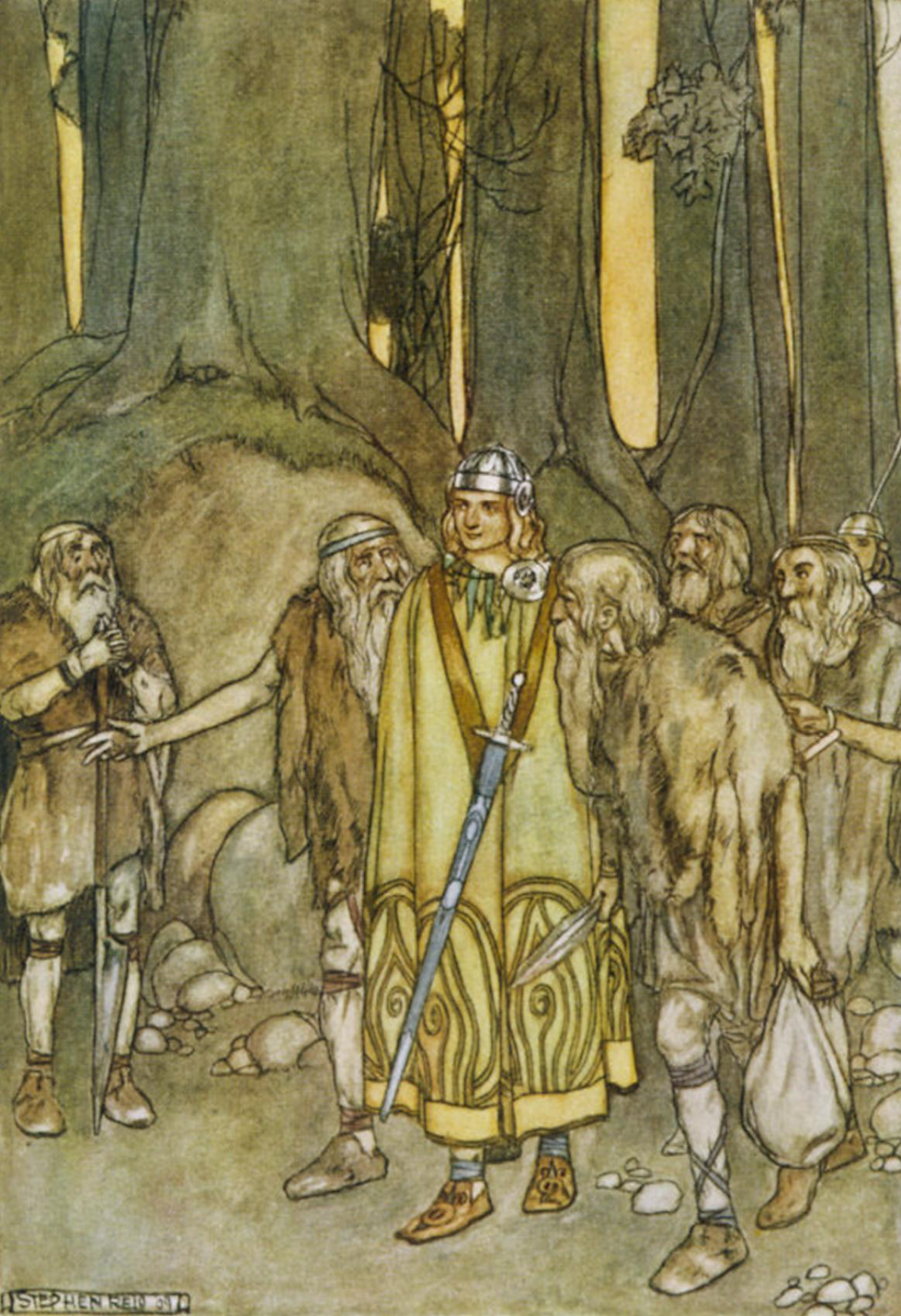
(Imagem retirada de Wikipédia)
De quando em vez, lá vos trago uma figura ou um herói da tradição irlandesa. Quase sempre os descubro por acaso mas rapidamente me apaixono…
Creio que tenho a síndrome do *Chet Baker…
Embora muitas histórias o situem em Ulster ou no norte da Irlanda, Fionn mac Cumhaill terá nascido em Leinster, província histórica na parte oriental da ilha. Filho de Cumhall, líder dos Fianna, um grupo de guerreiros de elite, e de Muirne, filha do druida Tadg mac Nuadat, a sua origem já prenunciava uma vida marcada por coragem e destino.
De acordo com a tradição, Fionn e o pai pertenciam à tribo dos Uí Thairsig, uma das três tribos descendentes dos Fir Bolg. Cumhall servia o rei Conn Cétchathach, conhecido como “o Rei das Cem Batalhas”, na região de Cenandos, que corresponde à actual cidade de Kells, no condado de Meath.
Conta-se que, após a morte do pai, Fionn foi criado em segredo na floresta de Sliabh Bladhma por Bodhmall, uma druida, e Liath Luachra, uma destemida guerreira.
Mais tarde, foi Fionn mac Cumhaill, ele próprio, quem se tornou líder dos Fianna, fazendo deles a irmandade lendária de caçadores e guerreiros que a tradição preservou, vagando pela Irlanda, protegendo o povo e enfrentando monstros, invasores e desafios sobrenaturais. Diz-se que ele e os Fianna percorreram várias regiões, incluindo as montanhas e vales de Wicklow, onde caçavam veados, treinavam ou se escondiam das forças invasoras, aproveitando o terreno acidentado para se proteger e preparar emboscadas, mantendo viva a fama que o tornaria lenda — um dos heróis mais célebres da mitologia irlandesa, misturando coragem, astúcia e uma certa sabedoria quase mágica, fruto da famosa história do Salmão do Conhecimento.
Em certa medida é o Astérix cá da terra… Não acreditam? Vejam a história:
O Salmão do Conhecimento é uma criatura mítica que residia — quem sabe não deixou descendência — no rio Boyne. Não tem nada de comum uma vez que ele adquiriu todo o conhecimento do mundo ao consumir as avelãs de nove Aveleiras que cresciam ao redor do Poço da Sabedoria. Elas caíam na água, e o salmão comia-as, absorvendo assim esse saber universal.
Finnegas, um renomado poeta e druida, sabia da existência deste salmão mágico e dedicou sete anos a tentar pescá-lo. Ele acreditava que quem provasse o peixe herdaria todo esse saber. Após inúmeras tentativas, finalmente Finnegas conseguiu pescá-lo e pediu ao jovem Fionn mac Cumhaill, seu aprendiz, que o cozinhasse, instruindo-o a não o provar.
Enquanto cozinhava o salmão, Fionn acidentalmente queimou o polegar com a gordura quente do peixe. Para aliviar a dor, ele colocou o polegar na boca e nesse mesmo momento, toda a sabedoria do salmão foi-lhe transmitida. A partir de então, sempre que Fionn precisava de orientação ou conhecimento, ele mordia o polegar e recebia a sabedoria necessária.
E assim nasceu não apenas um herói forte e corajoso, mas também um estratega sábio, capaz de enfrentar qualquer desafio com astúcia, coragem e aquele toque de magia que só os mitos irlandeses sabem dar. E nem precisou cair num caldeirão, a este bastou-lhe o dedo…
Mas não pensem que a vida de Fionn se limitou a comer peixe mágico.
Liderar os Fianna exigia mais do que bravura e destemor: cada missão era um teste à sagacidade, cada monstro ou invasor uma oportunidade de mostrar que, com o polegar sempre à mão, ele sabia exactamente o que fazer. Era esse equilíbrio entre bravura e inteligência que tornava Fionn único, e que transformava as histórias dos Fianna em lendas contadas à volta da lareira, na Irlanda inteira.
Ora foi em Tara, a antiga colina real no condado de Meath, considerada a sede simbólica dos High Kings (Altos Reis), um espaço cerimonial e político de enorme importância nas tradições celtas, que se passou uma das histórias mais conhecidas sobre Fionn e a forma como se tornou líder dos Fianna. Todos os anos, na festa de Samhain, Tara era atacada por Aillén mac Midgna, uma criatura capaz de adormecer todos com a sua música encantada e que, de seguida, lançava fogo ao salão real, reduzindo-o a cinzas. Durante vinte e três anos ninguém conseguiu detê-lo, até que Fionn, então ainda jovem, se apresentou para enfrentar o monstro. Munido de uma lança mágica que o protegia contra feitiços, conseguiu manter-se acordado, derrotar Aillén e salvar Tara. Foi esta façanha que o fez ser reconhecido como líder dos Fianna.
Desde então, as lendas sobre ele parecem espalhar-se por toda a Irlanda, deixando marcas na toponímia e nas tradições locais.
Por exemplo, o Monte Seefin — na cadeia de montanhas de Glenasmole, a oeste do condado de Wicklow — é um dos muitos lugares que partilham este nome, sempre com uma lenda associada. Ele vem do irlandês Suí Finn, que significa “Assento de Fionn”, tendo recebido o nome pela tradição popular que, neste caso, imaginava o herói a reunir-se ali com os Fianna, vigiando a paisagem em redor.
No seu cume ergue-se, de facto, um monumento megalítico — que não é uma cadeira — muito mais antigo do que as histórias de Fionn. Qualquer associação com Fionn é pura coincidência… mas vale a pena visitar, até porque se percebe perfeitamente por que motivo este lugar inspirou tantas lendas e se tornou um ponto de vigia natural — as vistas são deslumbrantes.
Para os que preferem romance, deixo uma entre tantas outras lendas do Ciclo Feniano, a história de Diarmuid e Gráinne destaca-se pelo drama e pela aventura. Gráinne, filha do alto rei Cormac, estava prometida a Fionn mac Cumhaill, mas, tomada por um amor inesperado por Diarmuid, um jovem e valente guerreiro dos Fianna, decidiu com ele fugir.
Claro que, mal saíram do castelo, começou uma perseguição que atravessou a Irlanda inteira: vales verdes, rios serpenteantes e montanhas enevoadas tornaram-se o palco de emboscadas, estratégias engenhosas e sustos que fariam qualquer um tremer de emoção.
Enquanto Fionn e os Fianna tentavam recuperar a noiva prometida, Diarmuid provava a sua coragem e engenho a cada passo, protegendo Gráinne e enfrentando os perigos que surgiam pelo caminho. Entre caçadas, refúgios secretos e noites passadas sob o céu estrelado, a história revela um mundo em que o amor e a lealdade se cruzam com a honra e a tradição.
A viagem de Diarmuid e Gráinne durou anos.
No fim, a lenda, como sempre, tem várias versões: algumas dizem que Fionn, precisamente por ser sábio, permitiu que o amor prevalecesse, encontrando uma forma de selar a paz entre os amantes e os Fianna. Outras, mais trágicas, relatam que Diarmuid acabou por morrer, vítima de uma ferida antiga que o destino ou a magia não conseguiram evitar, e Gráinne foi forçada a viver com a memória da fuga e da coragem do seu amado Diarmuid.
Em qualquer uma delas, parece que Fionn ficou mesmo a chupar no dedo, mas sem gosto de salmão…
Seja como for, digo-vos mais: os Fianna não eram apenas guerreiros sanguinários… também cantavam, compunham poemas, contavam histórias e preservavam a cultura gaélica, garantindo que as tradições passassem de geração em geração. Para se pertencer aos Fianna, era preciso demonstrar força, coragem e talento poético: era necessário conhecer profundamente os Doze Livros da Poesia, que registravam a história, genealogia e lendas da Irlanda, e possuir habilidade para compor versos nos estilos e métricas dos mestres da poesia gaélica. Fionn, no meio de tudo isto, não era só um chefe de batalhas — era um Astérix sem banda desenhada, valente e poderoso quando necessário, mas cheio de humanidade. Talvez por isso, séculos depois, continue a ser lembrado não apenas como herói, mas como aquele que, entre caçadas, versos e cantorias, deixou a sua marca na paisagem e na memória da Irlanda.
E, como gosto sempre de manter a mente aberta, deixo-vos com isto… Alguns historiadores dizem que Fionn mac Cumhaill não seria apenas uma figura mitológica, mas um herói lendário, alguém que de facto existiu, um homem cujo nome e feitos se perderam entre mito e história. Isso não diminui a magia das suas aventuras — pelo contrário, acrescenta-lhes um charme especial. Imaginem só: um líder dos Fianna a caminhar pelos vales e montanhas da Irlanda, a caçar, a lutar e a proteger o povo, cujas façanhas depois se misturaram com salmão, monstros e o amor impossível de Gráinne. Saber que, por detrás da lenda, pode ter existido um homem de carne e osso torna o Fionn ainda mais fascinante…
Nota: * I Fall in Love Too Easily”, música de Jule Styne e letra de Sammy Cahn, foi escrita em 1944 para o filme Anchors Aweigh e tornou-se uma canção icónica do jazz, ficando especialmente conhecida pela interpretação de Chet Baker.
English Version
From time to time, I bring you a figure or a hero from Irish tradition. I almost always discover them by chance, but I quickly fall in love…
I think I suffer from *Chet Baker syndrome…
Although many stories place him in Ulster or in the north of Ireland, Fionn mac Cumhaill was likely born in Leinster, a historic province in the eastern part of the island. Son of Cumhall, leader of the Fianna, a group of elite warriors, and Muirne, daughter of the druid Tadg mac Nuadat, his origin already foretold a life marked by courage and destiny.
According to tradition, Fionn and his father belonged to the Uí Thairsig tribe, one of the three tribes descended from the Fir Bolg. Cumhall served King Conn Cétchathach, known as “the Hundred Battles King,” in the region of Cenandos, which corresponds to the present-day town of Kells, in County Meath.
It is said that, after his father’s death, Fionn was raised in secret in the forest of Sliabh Bladhma by Bodhmall, a druidess, and Liath Luachra, a fearless warrior.
Later, it was Fionn mac Cumhaill himself who became the leader of the Fianna, transforming them into the legendary brotherhood of hunters and warriors preserved by tradition, roaming Ireland, protecting the people, and facing monsters, invaders, and supernatural challenges. It is said that he and the Fianna traveled through various regions, including the mountains and valleys of Wicklow, where they hunted deer, trained, or hid from invading forces, using the rugged terrain to defend themselves and set ambushes, keeping alive the fame that would make him a legend — one of the most celebrated heroes of Irish mythology, blending courage, cunning, and a kind of almost magical wisdom, born from the famous story of the Salmon of Knowledge.
Somewhat, he’s kind of an Asterix, Irish-style… Don’t believe me? Check out the story:
The Salmon of Knowledge is a mythical creature that lived — who knows, perhaps it left descendants — in the River Boyne. It was no ordinary fish, as it acquired all the knowledge in the world by eating the hazelnuts from nine Hazel trees growing around the Well of Wisdom. The nuts would fall into the water, and the salmon devoured them, absorbing that universal knowledge.
Finnegas, a renowned poet and druid, knew of the existence of this magical salmon and spent seven years trying to catch it. He believed that whoever tasted the fish would inherit all its knowledge. After countless attempts, Finnegas finally caught it and asked his young apprentice, Fionn mac Cumhaill, to cook it, instructing him not to taste it.
While cooking the salmon, Fionn accidentally burned his thumb with the hot fish fat. To ease the pain, he put his thumb in his mouth, and at that very moment, all the salmon’s wisdom was passed on to him. From then on, whenever Fionn needed guidance or knowledge, he would bite his thumb and receive the wisdom he required.
And so was born not only a strong and brave hero, but also a wise strategist, able to face any challenge with cunning, courage, and that touch of magic only Irish myths can provide. And he didn’t need to fall into a cauldron — for this one, a finger was enough…
all it took was a finger — no cauldron required.
But don’t think Fionn’s life was limited to eating magical fish. Leading the Fianna required more than bravery and fearlessness: every mission tested his wit, every monster or invader was an opportunity to show that, with his thumb always at hand, he knew exactly what to do. It was this balance of courage and intelligence that made Fionn unique, and that turned the tales of the Fianna into legends told around hearths across all of Ireland.
Well, it was in Tara, the ancient royal hill in County Meath, considered the symbolic seat of the High Kings, a ceremonial and political space of enormous importance in Celtic traditions, that one of the best-known stories about Fionn and how he became leader of the Fianna took place. Every year, at the festival of Samhain, Tara was attacked by Aillén mac Midgna, a creature capable of putting everyone to sleep with his enchanted music and then setting the royal hall on fire, reducing it to ashes. For twenty-three years, no one managed to stop him, until Fionn, then still young, stepped forward to face the monster. Armed with a magical spear that protected him from spells, he managed to stay awake, defeat Aillén, and save Tara. It was this feat that made him be recognized as leader of the Fianna.
Since then, legends about him seem to have spread all across Ireland, leaving their mark on local place names and traditions. For example, Seefin Mountain — in the Glenasmole mountain range, to the west of County Wicklow — is one of many sites that share this name, always with a legend attached. Its name comes from the Irish Suí Finn, meaning “Fionn’s Seat,” named according to popular tradition, which in this case imagined the hero gathering there with the Fianna, keeping watch over the surrounding landscape.
At its summit stands, in fact, a megalithic monument — which is by no means a chair — far older than the stories of Fionn. Any association with Fionn is purely coincidental… but it’s worth a visit, if only because you can clearly see why this place inspired so many legends and became a natural lookout — the views are breathtaking.
For those who prefer romance, I leave you with one among many legends from the Fianna Cycle: the story of Diarmuid and Gráinne stands out for its drama and adventure. Gráinne, daughter of the High King Cormac, was promised to Fionn mac Cumhaill, but, struck by an unexpected love for Diarmuid, a young and valiant warrior of the Fianna, she decided to run away with him.
Of course, as soon as they left the castle, a chase began that spanned the whole of Ireland: green valleys, winding rivers, and misty mountains became the stage for ambushes, clever strategies, and thrills that would make anyone shiver with excitement.
As Fionn and the Fianna tried to reclaim the promised bride, Diarmuid proved his courage and cunning at every turn, protecting Gráinne and facing the dangers that arose along the way. Between hunts, secret hideouts, and nights spent under the starry sky, the story unveils a world where love and loyalty intertwine with honour and tradition.
Diarmuid and Gráinne’s journey lasted for years.
In the end, as always, the legend has many versions: some say that Fionn, precisely because he was wise, allowed love to prevail, finding a way to bring peace between the lovers and the Fianna. Others, more tragic, recount that Diarmuid eventually died, struck by an old wound that neither fate nor magic could avert, and Gráinne was left to live with the memory of her flight and the courage of her beloved Diarmuid.
In any of them, it seems that Fionn was left sucking his thumb after all — but without that salmon flavour…
Be that as it may, let me tell you this: the Fianna were not just fierce warriors… they also sang, composed poetry, told stories, and preserved Gaelic culture, ensuring that traditions were passed down from generation to generation. To belong to the Fianna, one had to demonstrate strength, courage, and poetic talent: one needed to know the Twelve Books of Poetry, which recorded Ireland’s history, genealogy, and legends, and possess the skill to compose verses in the styles and meters of the Gaelic poetry masters. Fionn, in the midst of all this, was not just a battle leader — he was an Astérix without a comic book, brave and powerful when needed, yet full of humanity. Perhaps that is why, centuries later, he is remembered not only as a hero, but as the one who, amid hunts, verses, and songs, left his mark on both the landscape and the memory of Ireland.
And, as I always like to keep an open mind, I leave you with this… Some historians suggest that Fionn mac Cumhaill was not merely a mythological figure, but a legendary hero, someone who may indeed have existed — a man whose name and deeds became entwined with myth and history. This doesn’t diminish the magic of his adventures — on the contrary, it adds a special charm. Just imagine: a leader of the Fianna walking through Ireland’s valleys and mountains, hunting, fighting, and protecting the people, whose feats later became entangled with salmon, monsters, and Gráinne’s impossible love. Knowing that behind the legend there may have been a man of flesh and blood makes Fionn all the more fascinating…
Note: *“I Fall in Love Too Easily,” music by Jule Styne and lyrics by Sammy Cahn, was written in 1944 for the film Anchors Aweigh and became an iconic jazz song, especially known for Chet Baker’s rendition.


Gosto da banda sonora 🤗