Glendalough
- luaemp
- 23 de nov. de 2025
- 12 min de leitura
(Followed by the English version)

Pensem grande… Pensem verde e nas cores outonais… Pensem em paz silenciosa que vos devolve à essência… Respirem, devagar… Sintam o cheiro a pinheiro, a hortelã, o frescor da água na terra, nas raízes exuberantes… Ouçam as cascatas… os pássaros… o lago…
Falo-vos de Glendalough, ou Gleann Dá Loch — o “vale dos dois lagos” — a alma de Wicklow. Um vale glacial no coração do condado, entre montanhas que parecem fechar-se num abraço, guardando os seus dois lagos como espelhos do céu.
Hoje, este refúgio integra o Wicklow Mountains National Park, onde diversos trilhos bem cuidados e com nome próprio, conduzem os visitantes por florestas e lagos, revelando a beleza do lugar a cada curva.
Percorrê-los é atravessar séculos de história(s) — das pedras monásticas que ainda resistem, às lendas que o vento sussurra entre as árvores, aos animais selvagens que não estranham a nossa presença como se fizéssemos parte de um todo… Talvez a força de Glendalough esteja precisamente nisso, nesse sentimento de pertença, no silêncio que nos envolve, na paz que se cola à pele e fica, mesmo depois de partires.


E agora…
Era uma vez Coemgen, ou Kevin, nascido por volta de 498 d.C., no seio de uma família nobre que incluía vários reis de Leinster. Seduzido pelo silêncio e pela contemplação, desde cedo sentiu que o seu caminho não passava pelo mundo agitado, mas pela oração, pela natureza e pelo recolhimento. A sua educação foi confiada a monges, e aos doze anos iniciou a sua formação monástica com três santos anciãos: Eogoin de Ardstraw, Lochan e Enna.
Após a sua formação, Kevin retirou-se para o vale de Glendalough, onde fundou um mosteiro que se tornou um importante centro monástico na Irlanda medieval.
Um dos percursos leva-nos a Monastic City, ou aquilo que sobra do que ele próprio ajudou a erguer. A Round Tower, com os seus 33 metros de altura, servia como farol para os peregrinos e refúgio durante os ataques.


A St. Kevin’s Church, conhecida como “St. Kevin’s Kitchen” devido à sua torre redonda, que parece uma chaminé, é um exemplo da arquitectura monástica irlandesa.


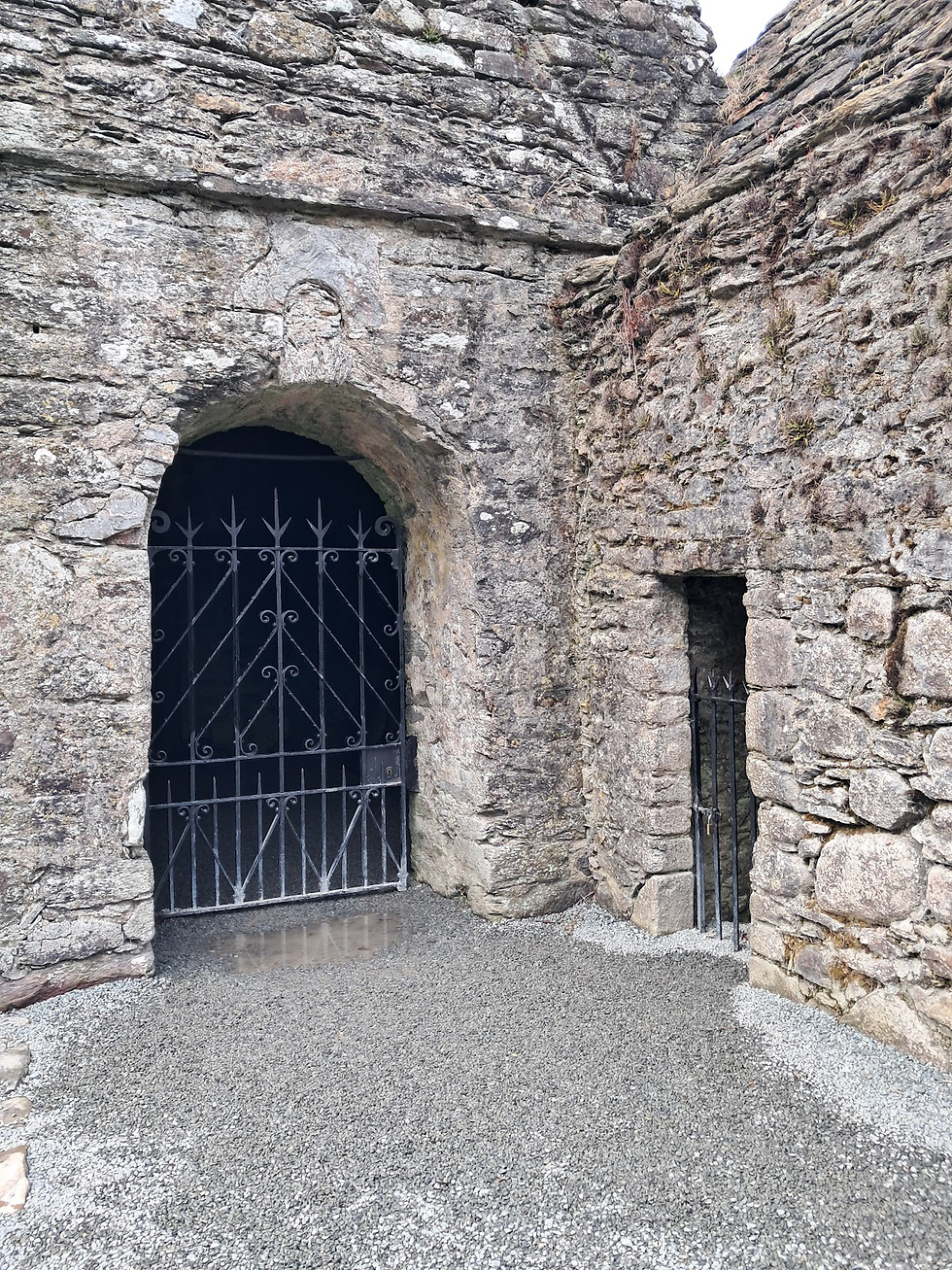

A Catedral de S. Pedro e S. Paulo, construída entre os séculos X e XIII, revela a grandiosidade da comunidade que ali habitava.


A St. Kevin’s Cross, com cerca de 3,35 metros de altura, esculpida em granito local, simboliza a fusão do cristianismo com as tradições pagãs da região. Conhecida como a “Wishing Cross”, a tradição popular diz que quem conseguir abraçar a cruz por completo, unindo as mãos no outro lado, verá o seu desejo realizado.


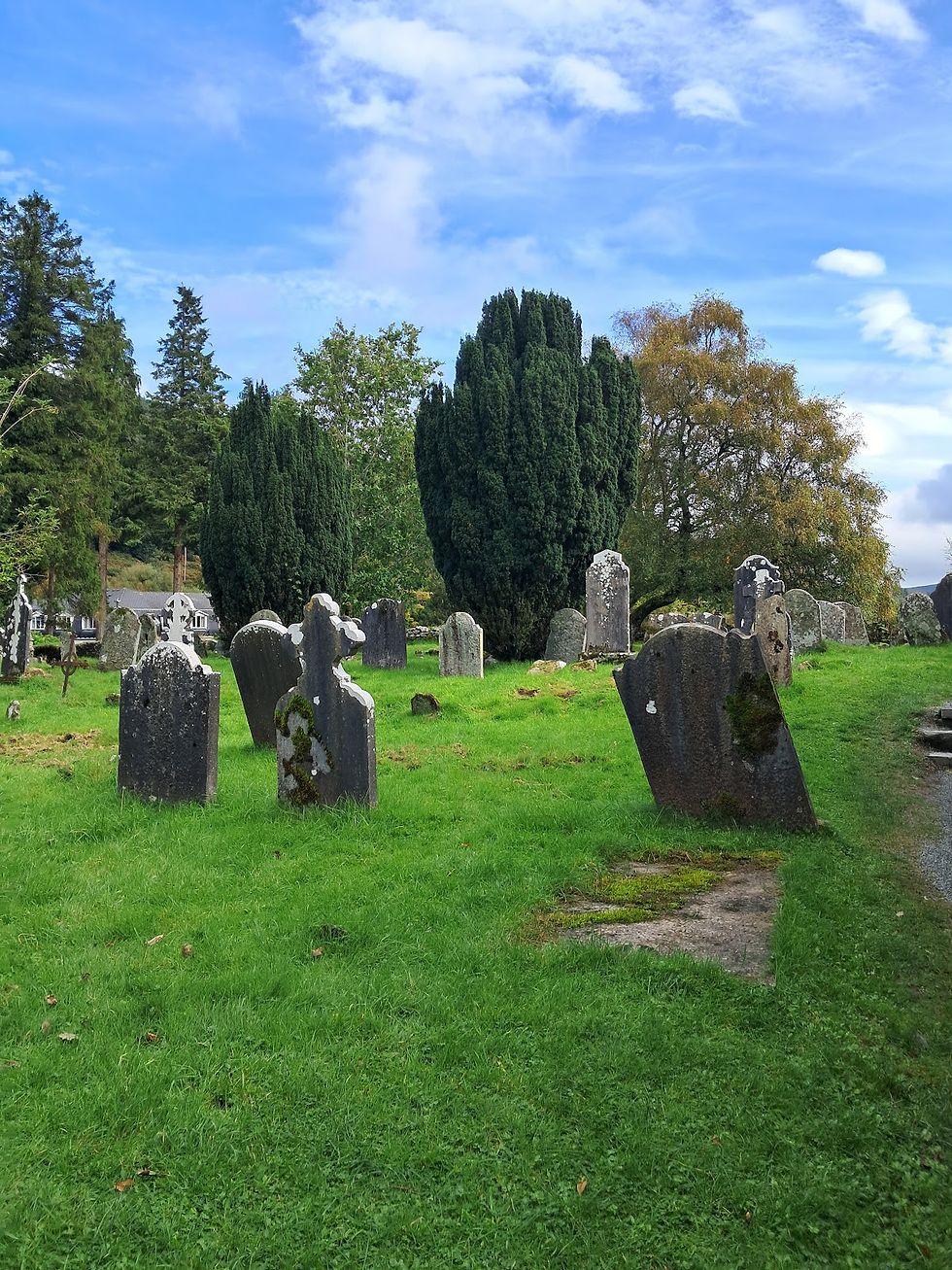
Em volta de todas estas ruínas, os cemitérios e suas lápides, também elas gastas pelo tempo…

Decidimos seguir para o trilho Poulanass (em irlandês Poll an Eas, que significa “buraco da cascata”), que nos levou, após uma subida acentuada, à queda de água com o mesmo nome, onde a água cai apressada num barulho ensurdecedor.


Pelo trilho, um letreiro desvia-nos a atenção…

Esta ruína é de uma pequena igreja românica do século XI, erguida em granito local, simples mas de uma beleza austera. O seu nome, derivado do irlandês Ríogh Fearta — “cemitério real” — indica que o local já era utilizado como necrópole secular antes da chegada do cristianismo à Irlanda. A igreja apresenta planta de nave e abside, marcada por um arco de granito que separa a zona do altar. A porta de entrada, na parede ocidental, tem a padieira plana, também em granito. Nos cantos da nave, mísulas, pequenas saliências de pedra, sustentavam outrora o telhado de madeira.


No exterior e circundando a igreja, cruzes de pedra com padrões entrelaçados e lápides gastas pelo tempo atestam a continuidade do uso funerário do local ao longo dos séculos, preservando memórias de monges, peregrinos e, segundo dizem, da antiga família O’Toole, antigos chefes da região. A Reefert Church oferece um cenário sereno e contemplativo, onde a história repousa em harmonia com a natureza.

O Lower Lake já nos acompanhava, timidamente no percurso… podíamos vê-lo entre as árvores, delineado pelo contorno do verde das margens.


Mas fiquei minúscula quando cheguei ao Upper Lake…


É difícil descrever as múltiplas sensações que este lugar me proporcionou: pequenez em tamanho, sim — uma partícula de pó — mas, ao mesmo tempo, uma serenidade e pertença, como se estivesse fundida com a paisagem… embalada pela brisa e a suave ondulação das águas…
Quando, finalmente, saí do transe e me preparava para seguir viagem, descobri que o caminho para a cela de Kevin estava encerrado ao público, o que me entristeceu, mas me fez lembrar que era tempo de comer alguma coisa.
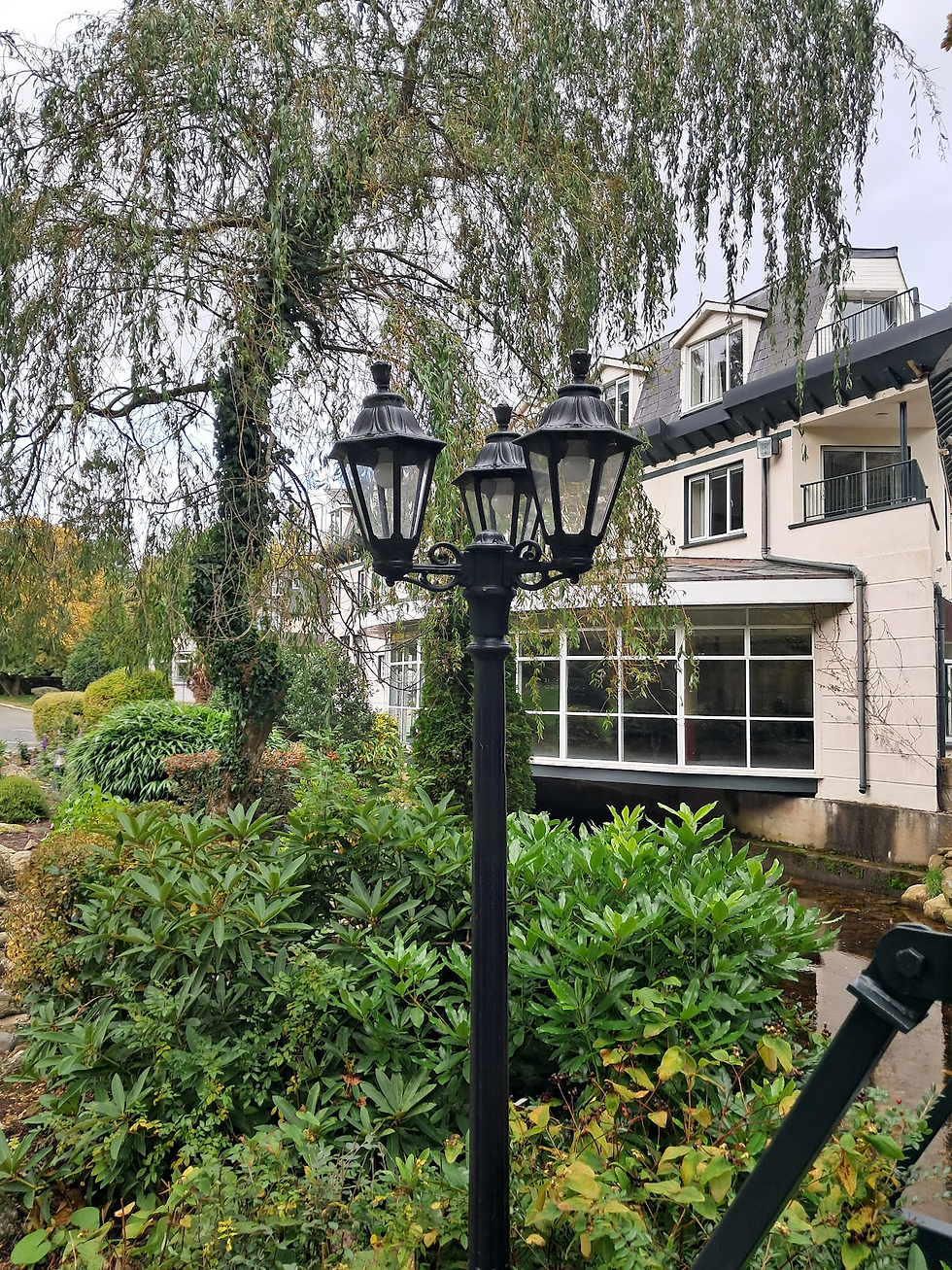
No hotel do parque, a calçada portuguesa, no seu interior, conduziu-me ao restaurante, onde apaziguei o estômago com um chowder — sopa cremosa de peixe e legumes, cozidos num caldo leve e enriquecida com leite ou natas.


A aventura prosseguiu, desta feita, calcorreando boa parte do caminho denominado Woodland Road, nas imediações do Vale de Glendasan (Gleann Dasáin, em irlandês), que serpenteia por florestas mistas e campos de pastagem, encontrando-se com o St Kevin's Way.


A paisagem bucólica com as ovelhas no pasto, o zurrar de burros à distância e a mistura de odores frescos vindos da vegetação variada, quase dava vontade de abrandar a marcha. Sorri interiormente, pois a cada passo, se encontrava sinalética que nos indicava a riqueza da fauna selvagem… Até agora, tirando uns patos bravos no lago, só via ou ouvia animais familiares.

Não me detive pois estava decidida a fazer o Miner's Road e chegar à Miner's Village.

Pelo caminho, o Centro Educativo …

E mais à frente um sinal que me chamou a atenção:

É certo que estava distante, na outra margem do Upper Lake, mas ainda assim senti-me menos triste pelo outro caminho estar interdito. Dava para ver a cavidade na rocha onde o santo gostava de repousar.

O odor a Pinheiro-silvestre intensificava-se deixando as narinas a pulular de alegria ao mesmo tempo que enchia os pulmões de uma overdose de oxigénio.

Quilómetros depois o primeiro indicador porque tanto esperava…

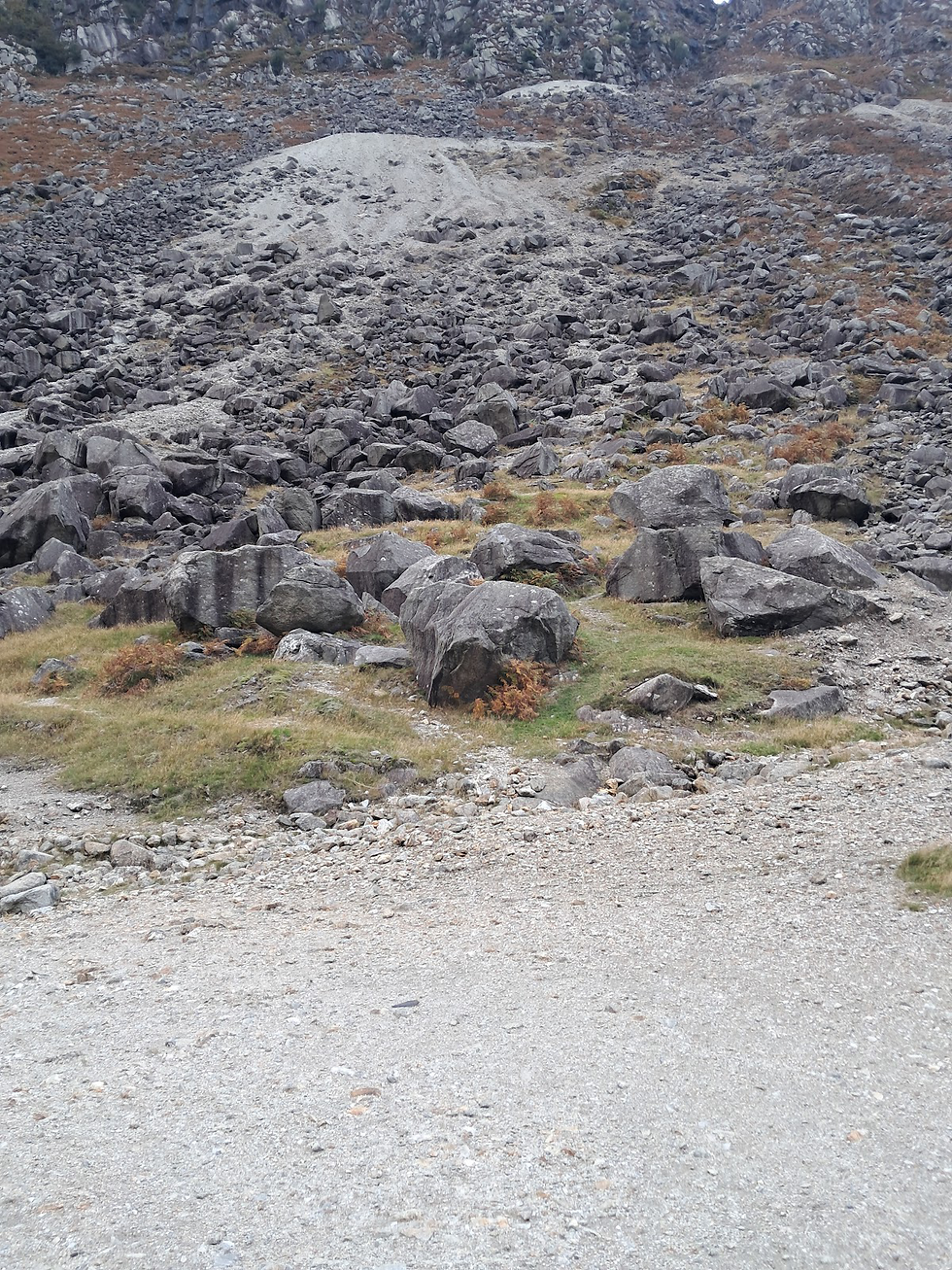
A paisagem muda… Muda de cor, de humor e de textura… O cinza do granito impera adornado aqui e além por vegetação rasteira nos tons da época… O lago também. Escurece e estreita à medida que se encontra com o rio Glendasan…


As minhas pernas ardiam. Ponderei desistir ao pensar nos quilómetros que teria de fazer no percurso inverso. “Vá lá, devemos estar quase” repetia como uma palavra de ordem.
Muitos metros à frente, uma curva e o tão aguardado sinal…

As ruínas das casas no sopé da montanha são tudo o que resta do que outrora foi o coração da exploração mineira que marcou o vale desde o início do século XIX, o centro de processamento primário de minério proveniente sobretudo de galerias do lado da Camaderry Mountain, em Glendasan.


De acordo com o relatório da Geological Survey Ireland (GSI), descobriu-se aqui sobretudo chumbo, mais concretamente galena (sulfureto de chumbo), acompanhado de blenda (sulfureto de zinco) e pirite (sulfureto de ferro) em menores quantidades, com pequenas quantidades de prata como subproduto, e em 1825 a Mining Company of Ireland tomou posse do lugar, abrindo galerias na montanha de Camaderry, construindo rodas hidráulicas, moinhos e casas para os trabalhadores. Dizem que, no seu auge, as minas empregavam mais de 200 pessoas, acima e abaixo de terra, extraindo quantidades significativas de minério todos os meses.
Parei por instantes para tentar imaginar a cena: homens a descer às profundezas húmidas, outros a triturar e a lavar o minério, crianças e mulheres a ajudar no que podiam.
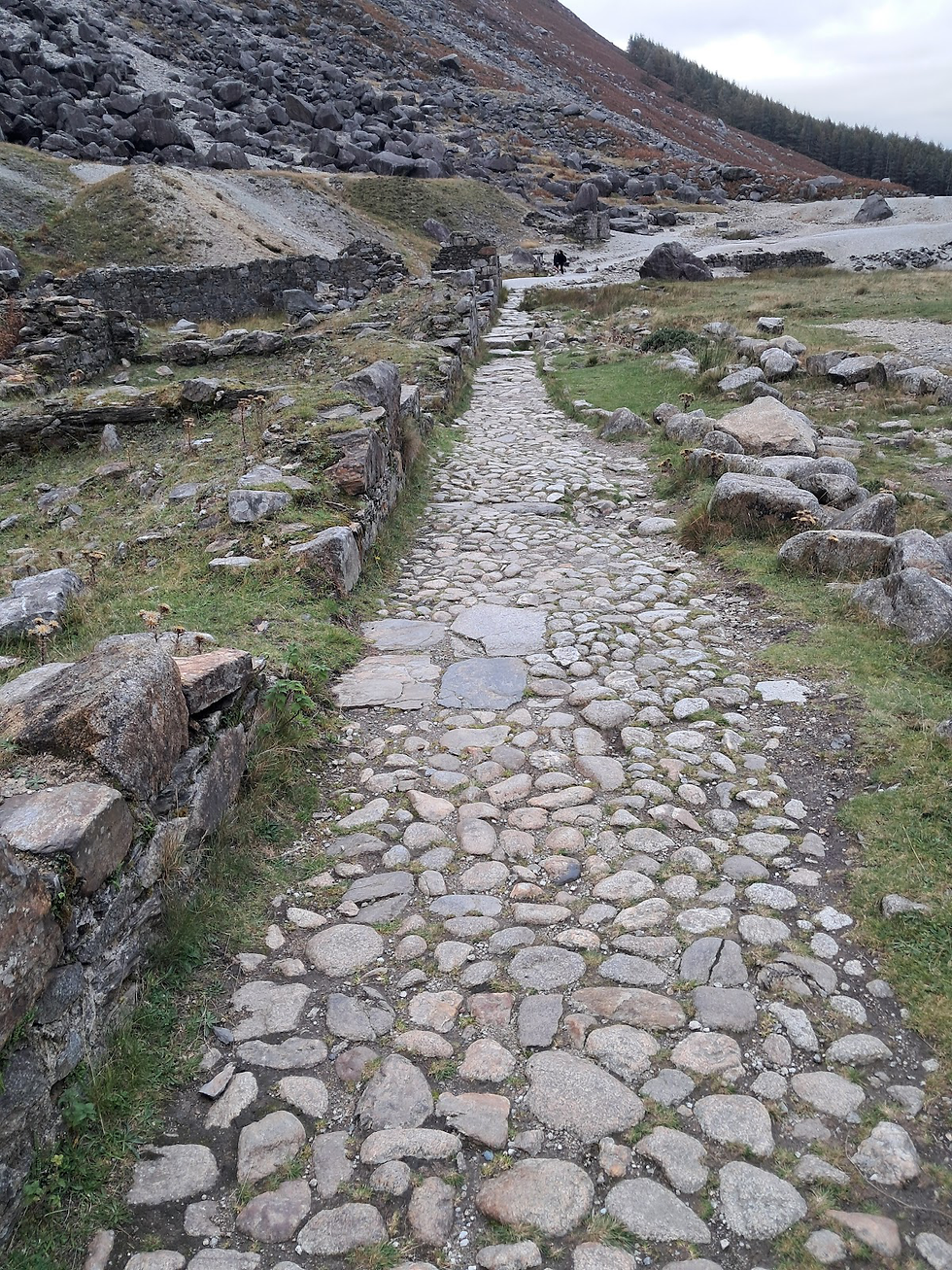

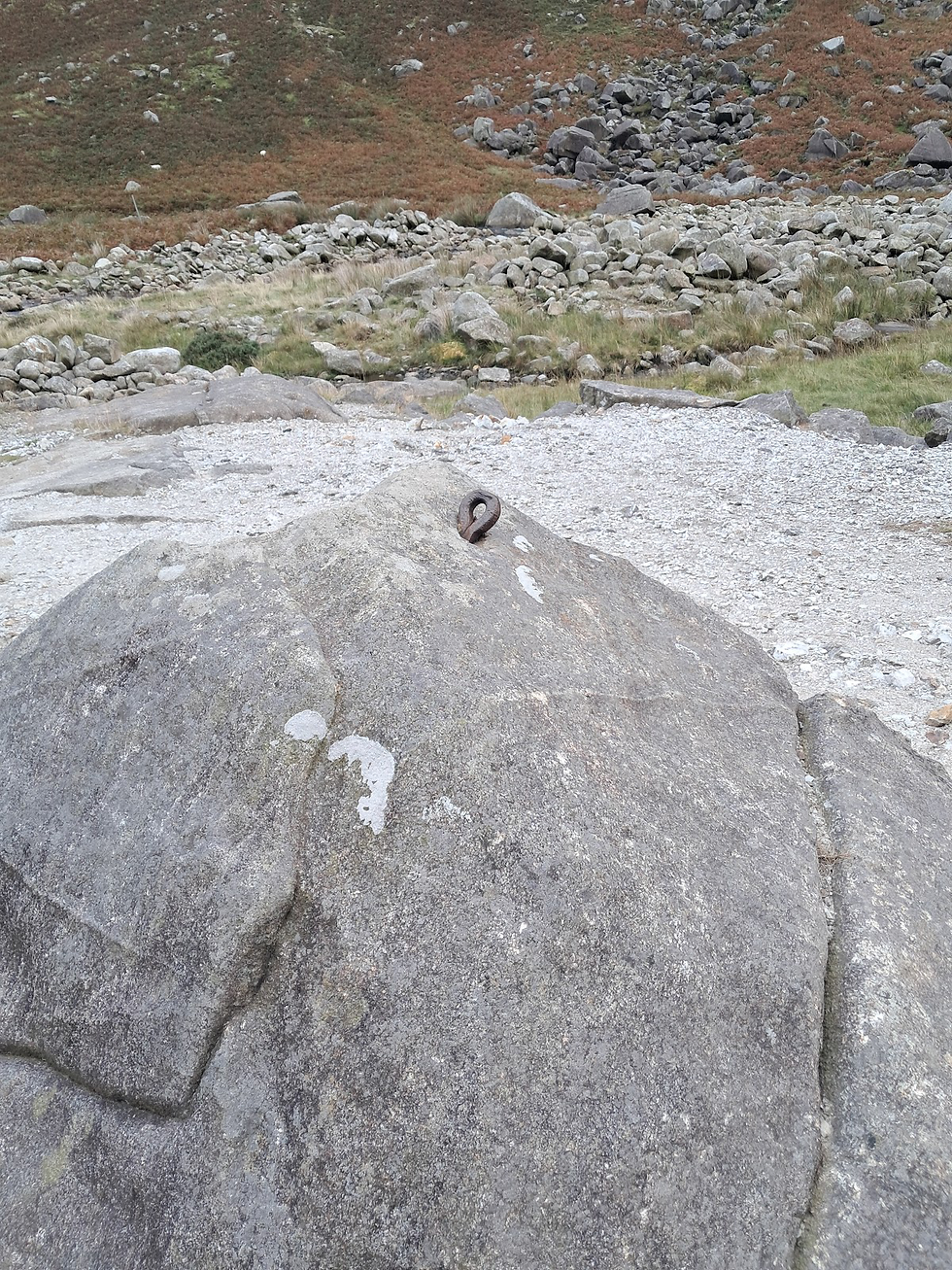


Durante décadas, estas pessoas dependeram do que estas rochas escondiam.
A mineração conheceu várias fases de apogeu e declínio, prolongando-se até 1957, quando as máquinas silenciaram de vez. Hoje restam os muros, as chaminés caídas e um silêncio que só a imaginação povoa, como se as vozes dos mineiros ainda ecoassem entre o granito e o vento.
Pára tudo…
O meu olhar é direccionado para outro lugar após ter notado nuns quantos viajantes a abrandarem a marcha quase em pé ante pé…
Um veado pastava como se nenhum de nós existisse… Após tanta sinalética, anunciando a imensa e variada fauna que poderíamos encontrar, fui agraciada com esta visão magnífica… Um veado (stag) no meio de ruínas… Mágico!


Magia ou o sopro de S. Kevin… pois, tal como ele, também tive vontade de ficar, ali, imóvel em profunda conexão com a natureza … Como uma das suas mais conhecidas histórias…
Reza a lenda que, na sua vida de eremita, Kevin passava horas no meio da natureza em oração, de mãos estendidas. Um dia, enquanto rezava, um pardal pousou na sua mão e fez ninho ali mesmo. Kevin manteve as mãos imóveis durante todos os dias necessários para que os filhotes crescessem e pudessem voar em segurança. Só quando o pássaro e os seus filhotes partiram é que ele se moveu.
Esta história simboliza paciência, harmonia com a natureza, cuidado, respeito profundo por todas as criaturas.
Mas era tempo de regressar… Muitos quilómetros a percorrer no sentido inverso, de preferência antes de anoitecer… Tudo estava agora mais nítido… Uma outra luz cobria as montanhas, as árvores eram mais verdes sem a intensidade solar como se se preparassem para adormecer. E eu, em contraciclo, levava comigo uma luz vibrante, acesa pela aprendizagem do vale.


O silêncio impunha-se, subindo de tom… Os pássaros e demais bichos haviam adormecido na penumbra… E eu, entre cansaço e serenidade, trilhava o caminho de volta, deixando que os pensamentos se desvanecessem com o dia…
Ao chegar ao carro, já quase o último no estacionamento, uma derradeira surpresa me esperava… Mãe (hind) e cria (fawn) de veado ceando sem pressa…

Glendalough não se visita — absorve-se. E, quando se parte, um pedaço de nós fica por lá, entre o lago e o vento.
English version
Think big… Think green and think autumnal colours… Think of the silent peace that brings you back to your essence… Breathe, slowly… Smell the pine, the mint, the freshness of water, the earth, the lush roots… Listen to the waterfalls… the birds… the lake…
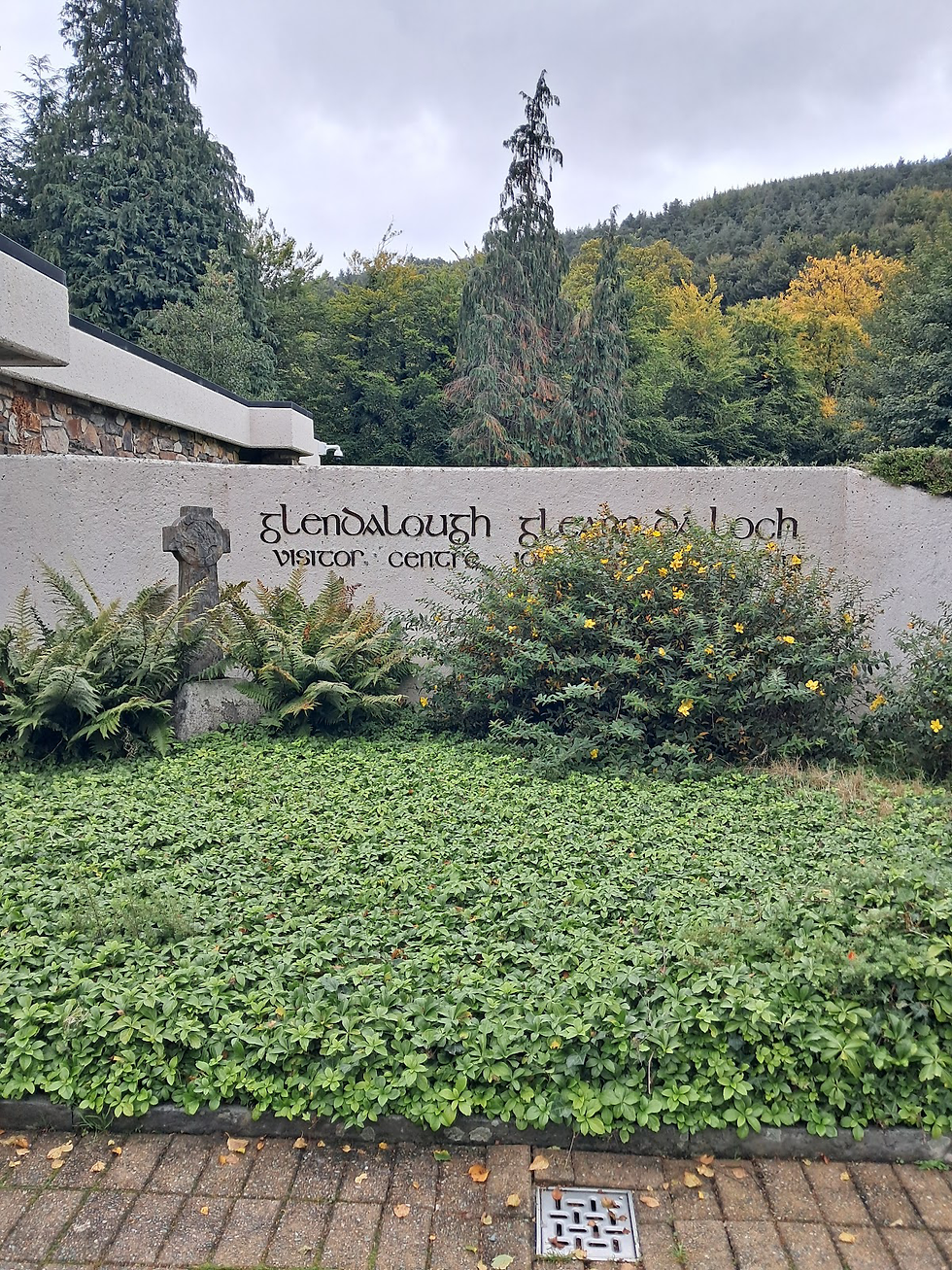
I speak to you of Glendalough, or Gleann Dá Loch — the “valley of the two lakes” — the soul of Wicklow. A glacial valley in the heart of the county, between mountains that seem to fold around it in an embrace, guarding its two lakes like mirrors of the sky.
Today, this refuge is part of the Wicklow Mountains National Park, where several well-maintained trails, each with its own name, lead visitors through forests and along lakes, revealing the beauty of the place at every turn.
Walking them is to cross centuries of history — from the monastic stones that still endure, to the legends the wind whispers among the trees, to the wild animals that do not flinch at our presence, as if we were part of the whole…
Perhaps Glendalough’s strength lies precisely in this: in that feeling of belonging, in the silence that surrounds us, in the peace that clings to the skin and remains, even after you leave.

And now…
Once upon a time, there was Coemgen, or Kevin, born around 498 A.D., into a noble family that included several kings of Leinster. Drawn to silence and contemplation, he early realized that his path would not follow the bustling world, but rather prayer, nature, and solitude. His education was entrusted to monks, and at the age of twelve he began his monastic training under three elder saints: Eogoin of Ardstraw, Lochan, and Enna.
After his formation, Kevin withdrew to the valley of Glendalough, where he founded a monastery that became an important monastic center in medieval Ireland.
One of the trails leads us to the Monastic City, or what remains of what he himself helped build. The Round Tower, standing 33 meters tall, served as a beacon for pilgrims and a refuge during attacks.


Kevin’s Church, known as “St. Kevin’s Kitchen” because of its round tower resembling a chimney, is an example of Irish monastic architecture.


The Cathedral of St. Peter and St. Paul, built between the 10th and 13th centuries, reveals the grandeur of the community that once lived there.


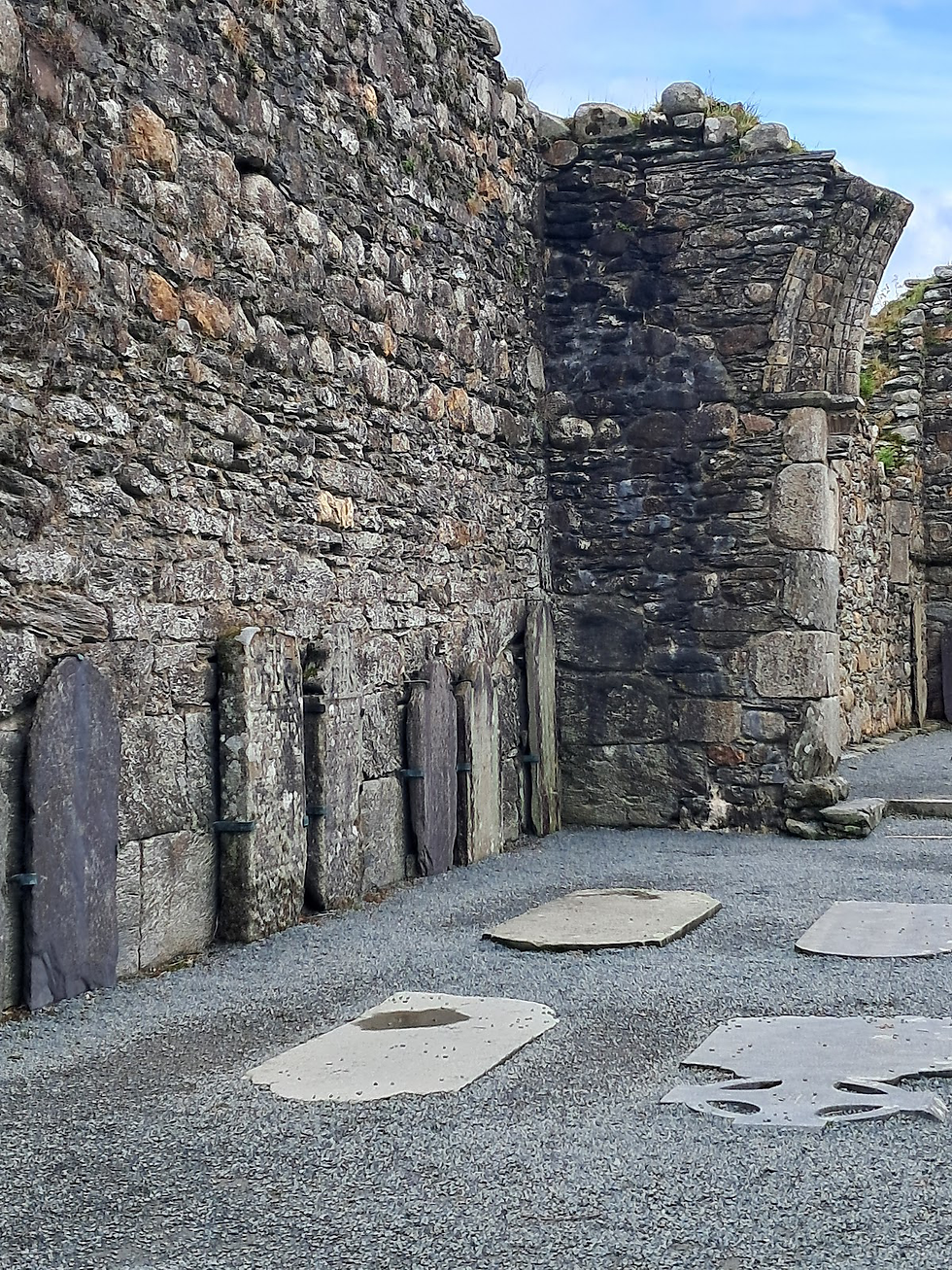

St. Kevin’s Cross, about 3.35 meters high and carved from local granite, symbolizes the fusion of Christianity with the region’s pagan traditions. Known as the “Wishing Cross,” local tradition says that anyone able to fully embrace the cross, joining their hands on the other side, will see their wish granted.


All around these ruins lie the cemeteries and their tombstones, also worn by time…


We then decided to follow the Poulanass trail (in Irish, Poll an Eas, meaning “hole of the waterfall”), which after a steep climb brought us to the waterfall of the same name, where the water plunges with a deafening roar.


Along the trail, a signboard catches our attention…

This ruin is of a small 11th-century Romanesque church, built from local granite, simple yet of austere beauty. Its name, derived from the Irish Ríogh Fearta — “royal cemetery” — indicates that the site was already used as a secular necropolis before the arrival of Christianity in Ireland. The church has a nave-and-apse layout, marked by a granite arch separating the altar area. The entrance door, on the western wall, has a flat lintel, also in granite. In the corners of the nave, corbels, small stone projections, once supported the wooden roof.

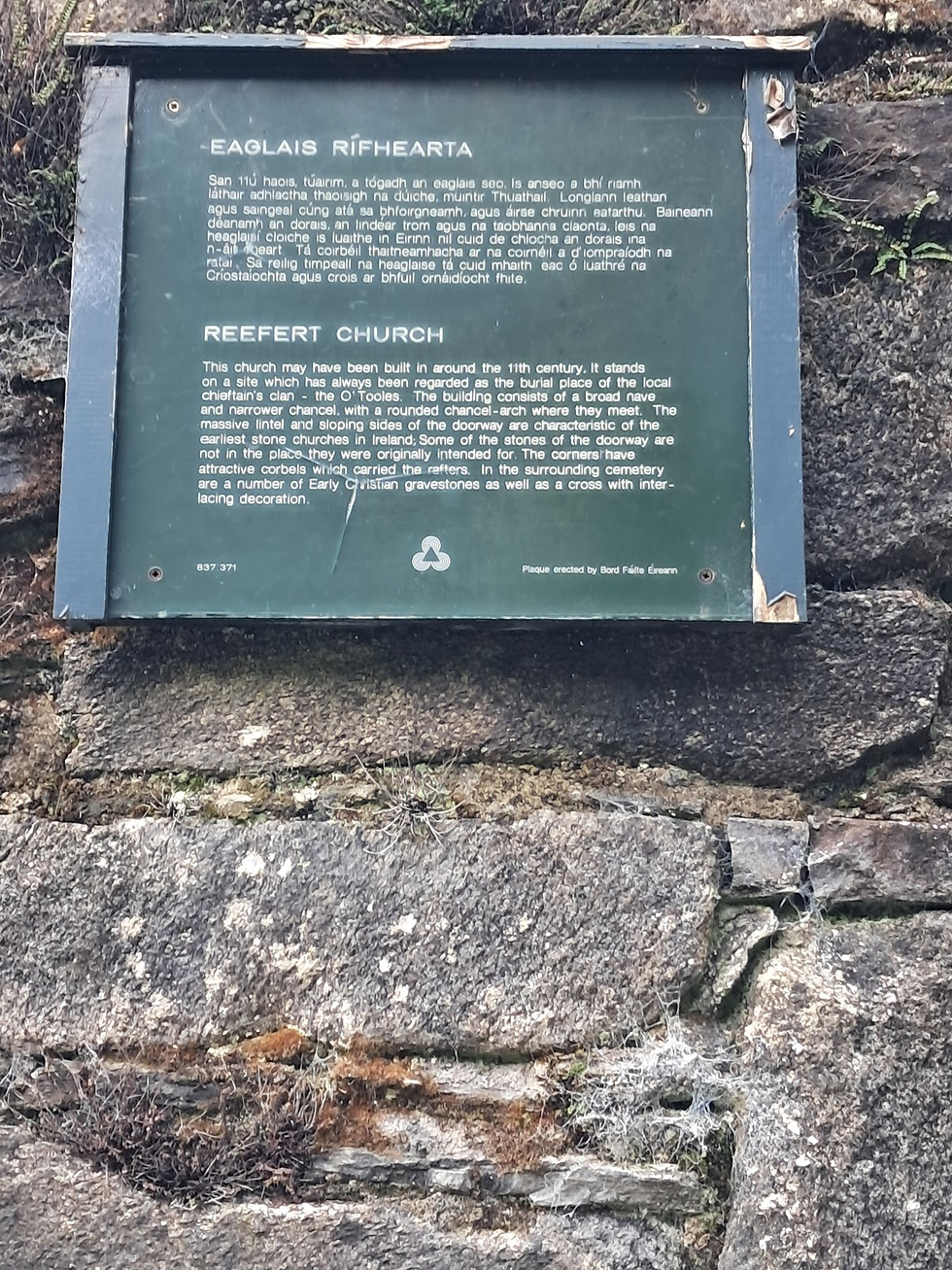


Outside, surrounding the church, stone crosses with interlaced patterns and weathered tombstones testify to the continued funerary use of the site over the centuries, preserving the memories of monks, pilgrims, and, it is said, the old O’Toole family, former chiefs of the region. Reefert Church offers a serene and contemplative setting, where history rests in harmony with nature.

The Lower Lake had already been accompanying us, shyly along the trail… we could see it through the trees, outlined by the green of its banks.


But I felt tiny when I reached the Upper Lake…
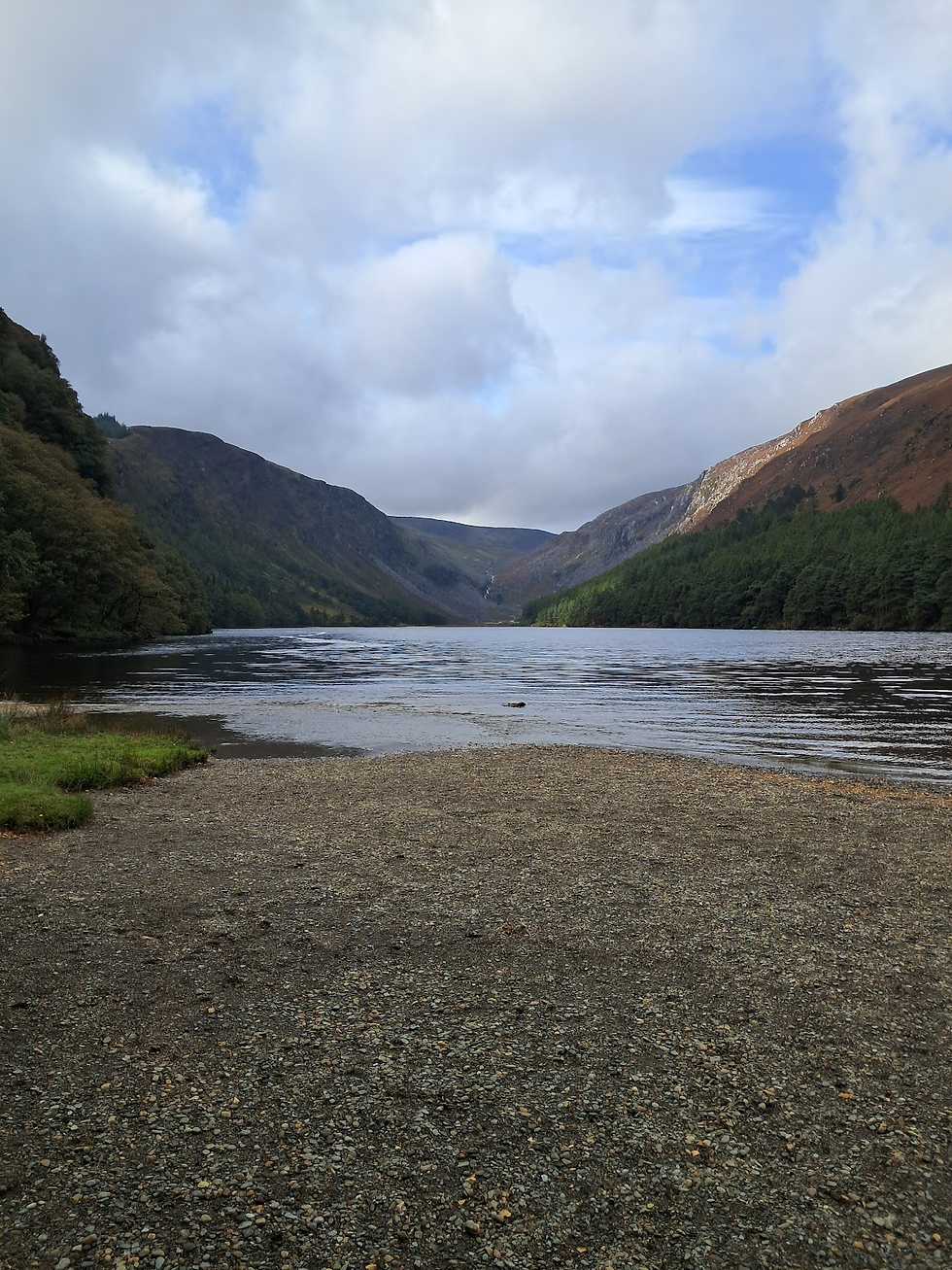


It is difficult to describe the multitude of sensations this place gave me: small in size, yes — a speck of dust — yet at the same time, a serenity and sense of belonging, as if I were fused with the landscape… rocked by the breeze and the gentle ripples of the water…
When, finally, I came out of the trance and prepared to continue on, I discovered that the path to Kevin’s cell was closed to the public, which saddened me, but reminded me that it was time to have something to eat.
At the hotel within the park, the Portuguese-style pavement inside guided me to the restaurant, where I appeased my stomach with a chowder — a creamy soup of fish and vegetables, cooked in a light broth and enriched with milk or cream.


The adventure continued, this time walking a large part of the trail called Woodland Road, near the Glendasan Valley (Gleann Dasáin in Irish), which winds through mixed forests and pasture fields, eventually meeting St. Kevin's Way.


The bucolic landscape, with sheep grazing, donkeys braying in the distance, and the blend of fresh scents from the varied vegetation, almost made me want to slow my pace. I smiled inwardly, for at every step, signage indicated the richness of the wildlife… Up until now, apart from a few wild ducks on the lake, I had only seen or heard familiar animals.

I did not linger, as I was determined to follow the Miner's Road and reach Miner's Village.

Along the way, the Educational Centre...

And further on, a sign that caught my attentio:

Admittedly, it was far away, on the other side of the Upper Lake, but I still felt less sad that the other path was closed. It was possible to see the cavity in the rock where the saint liked to rest.

The scent of Scots pine intensified, making my nostrils tingle with delight while filling my lungs with an overdose of oxygen.

Kilometers later, the first sign I had been eagerly awaiting:
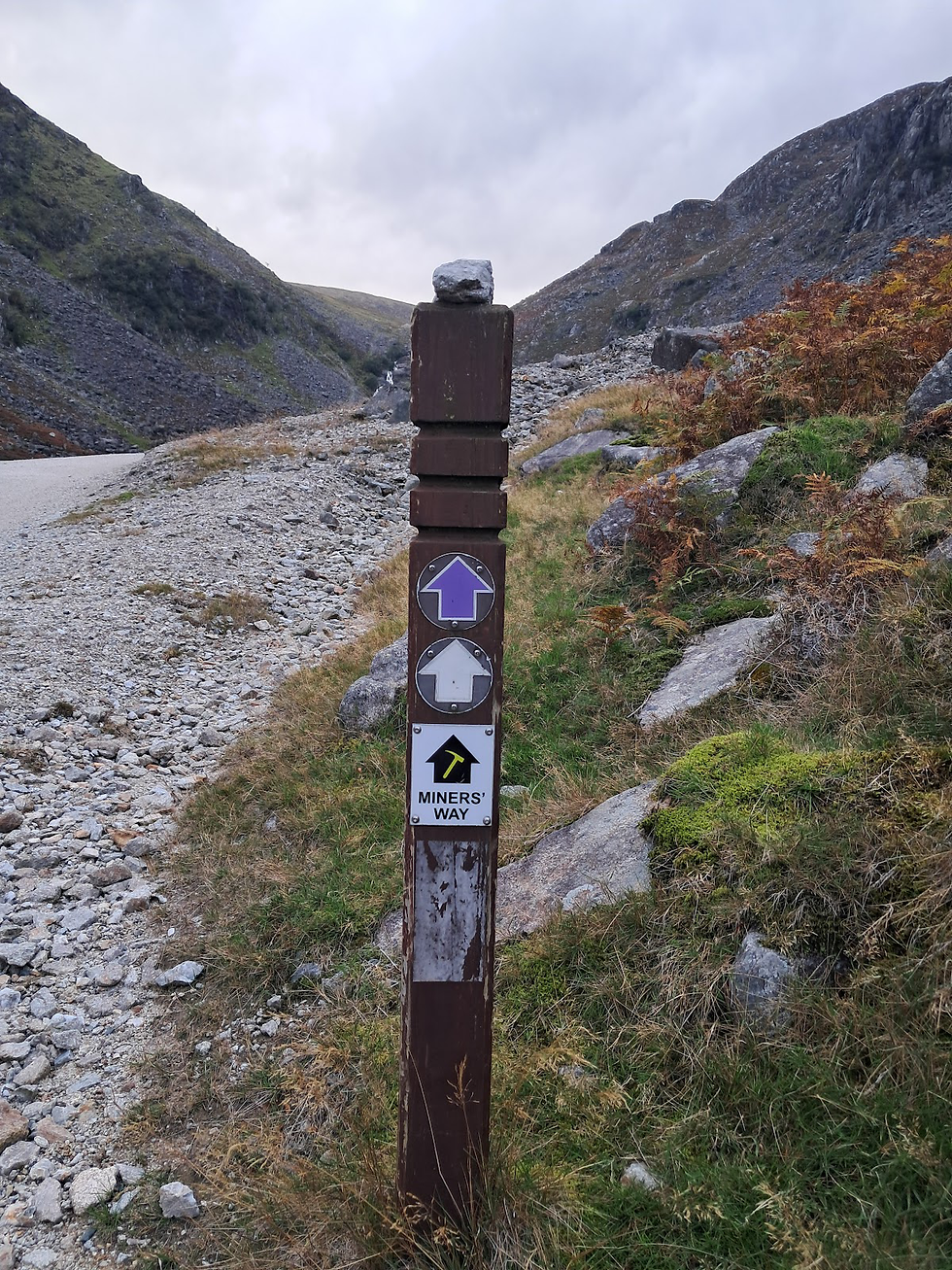
The landscape changes… It changes in colour, mood, and texture… The grey of the granite dominates, adorned here and there by low vegetation in seasonal hues… The lake changes too. It darkens and narrows as it meets the Glendasan River…


My legs were burning. I considered giving up when thinking of the kilometers I would have to walk back. “Come on, we must be almost there,” I kept repeating like a mantra.
Many meters ahead, a bend, and the long-awaited sign:

The ruins of the houses at the foot of the mountain are all that remains of what was once the heart of the mining activity that shaped the valley from the early 19th century — the primary processing centre for ore, mostly coming from galleries on the Camaderry Mountain side, in Glendasan.


According to the Geological Survey Ireland (GSI) report, lead was primarily discovered here, more specifically galena (lead sulfide), accompanied by sphalerite (zinc sulfide) and pyrite (iron sulfide) in smaller amounts, with trace quantities of silver as a by-product. In 1825, the Mining Company of Ireland took over the site, opening galleries on Camaderry Mountain, constructing water wheels, mills, and houses for the workers. They say that, at its peak, the mines employed over 200 people, above and below ground, extracting significant amounts of ore every month.
I paused for a moment, trying to imagine the scene: men descending into the damp depths, others crushing and washing the ore, children and women helping wherever they could.


For decades, these people depended on what the rocks concealed.
Mining went through several periods of boom and decline, continuing until 1957, when the machinery finally fell silent. Today, only the walls, fallen chimneys, and a silence inhabited solely by imagination remain, as if the voices of the miners still echoed between the granite and the wind.
Stop everything…
My gaze was drawn elsewhere after noticing a few travelers slowing their pace, almost tiptoeing…
A stag grazed as if none of us existed… After so many signs announcing the vast and varied wildlife we might encounter, I was blessed with this magnificent sight… A stag in the midst of … Magical!


Magic, or perhaps the breath of St. Kevin… for, like him, I also felt the urge to stay there, motionless, in deep connection with nature… Just like one of his most famous stories…
Legend has it that, in his life as a hermit, Kevin would spend hours in the heart of nature in prayer, hands outstretched. One day, while praying, a sparrow landed on his hand and built a nest right there. Kevin kept his hands still for all the days necessary for the chicks to grow and fly safely. Only when the bird and its fledglings had departed did he move.
This story symbolizes patience, harmony with nature, care, and profound respect for all living creatures.
But it was time to return… Many kilometers lay ahead on the way back, preferably before nightfall… Everything now seemed clearer… Another light covered the mountains, the trees greener without the intensity of the sun, as if preparing to fall asleep. And I, walking in counterpoint, carried with me a vibrant light, ignited by the lessons of the valley.


The silence settled, rising in intensity… The birds and other creatures had fallen asleep in the twilight… And I, caught between fatigue and serenity, walked back along the path, letting my thoughts fade away with the day…
Upon reaching the car, nearly the last one in the parking lot, one final surprise awaited me… A hind and her fawn dining unhurriedly…

Glendalough is not visited — it is absorbed. And when you leave, a piece of you remains there, between the lake and the wind.


Já lá estive e adorei!!!