Halloween com Fatos das Profundezas/Halloween with Outfits from the Depths
- luaemp
- 19 de out. de 2025
- 9 min de leitura
Atualizado: 25 de out. de 2025
(Followed by the English version)

(Imagem retirada da obra Vinte Mil Léguas Submarinas / Image taken from the work Twenty Thousand Leagues Under the Sea)
Com Outubro já a meio caminho e o Halloween ao virar da esquina, falemos de monstros e criaturas estranhas…
Quem sabe não se inspiram para um novo ‘outfit’…
Mas desta vez seleccionei a água como habitat natural… não se distraiam para não morrerem afogados… ou coisa pior…
Ah pois é, meus queridos, não julguem que é só a Escócia que tem monstros nos seus lagos… Se bem que percorri vários e nenhum deu o ar da sua graça.
Na área central da Irlanda, abrangendo os condados de Westmeath, Longford e Roscommon, estende-se o Lago Ree, um lago sereno que parece inofensivo à primeira vista. Mas as aparências enganam. Há quem jure ter visto uma criatura serpentiforme a mover-se sob a superfície — o famoso Monstro de Lago Ree. A história ganhou força nos anos 60, quando três padres alegaram ter visto algo de seis metros de comprimento a ondular nas águas calmas. Uns dizem que era uma serpente pré-histórica, outros garantem que era apenas um tronco com mau feitio. Ainda assim, poucos se atrevem a remar sozinhos ao entardecer.
Mais a norte, no Condado de Leitrim, o Lago Glenade é lar do temido Dobhar Chú, o cão aquático. Dizem que é metade lontra, metade lobo — e completamente implacável. Vive em pares, e se um for morto, o outro vinga-o. A lenda mais conhecida do Dobhar-chú remonta a 1722, quando uma mulher chamada Gráinne Ní Chonaill (Grace Connolly) foi atacada e morta pela criatura enquanto se banhava no lago. O seu marido, ao encontrar o corpo da esposa, matou o monstro. Acredita-se que o grito da criatura tenha atraído o seu companheiro, que perseguiu o homem até ser também morto. No túmulo de Grace Connolly, no cemitério de Glenade, a lápide guarda gravada a cena lendária: o Dobhar-chú com a cabeça virada para trás e uma mão cravando-lhe a lâmina, tornando-se um marco que perpetua a lenda do lago.

(Imagem retirada de Tony O'Neil)

(Imagem retirada de Nevsedona)

(Imagem retirada de Gods and Monsters)
Mais a sul, no Rio Shannon, Condado de Clare, esconde-se Cata (Cathach), o grande monstro marinho da tradição irlandesa. A história de Cata é mencionada no manuscrito medieval The Book of Lismore, datado do século XV, que descreve a criatura como um monstro marinho habitando uma ilha no estuário do Shannon, perto de Kilrush. Diz a lenda que a criatura, com corpo enorme, crina de cavalo e hálito ardente, atacava quem se aproximasse da ilha de Inis Cathaigh (Scattery Island), protegendo o local sagrado. S. Senán, santo do século VI, confrontou Cata e conseguiu banir a criatura, encerrando a ameaça que pairava sobre o estuário. De tempos a tempos o rio borbulha como se algo ainda respirasse nas profundezas. Quem passa perto da foz jura sentir o arrepio de olhos invisíveis a observarem, lembrando que certas lendas nunca morrem.

(Imagem retirada de University of Limerick)
No condado de Kerry, junto a Killarney, o Lago Leane guarda uma história mais etérea, profundamente enraizada no imaginário local. Fala-se da Lady of Lough Leane, uma mulher de beleza inconcebível que, segundo os relatos, aparece montada num cavalo branco, deslizando sobre as águas ao anoitecer.
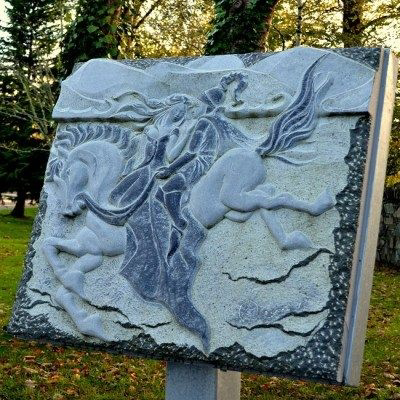
(Escultura de Leticia Mangan em Killarney)
Alguns afirmam que se trata de uma fada, associando-a às histórias dos Tuatha Dé Danann, os “povos das fadas” do folclore irlandês; outros acreditam ser uma alma presa entre mundos — talvez ligada às antigas famílias que viveram nas margens do lago, ou ainda à tradição de O’Donoghue Mór, um senhor local cuja lenda também fala de aparições sobre as águas — reza a história que ele emerge das águas deste mesmo Lago na primeira sexta-feira após o Samhain (fim de outubro/início de novembro), acompanhado de um cortejo de cavaleiros e músicos, como se estivesse a conduzir uma festa fantástica sob a água.

(Imagem retirada de WordPress)
De qualquer forma, o cenário contribui para o mistério: as montanhas reflectem-se no lago como espelhos, e ao entardecer o ar fica pesado e silencioso, como se tudo aguardasse o momento em que uma destas figuras surja à superfície das águas.
Ainda neste condado, durante uns estudos hidroacústicos realizados em 2003 pela Irish Char Conservation Group para vigiar populações de trutas, foi detectado no fundo do Lago Muckross algo sólido e enorme, dando início à lenda de Muckie, o monstro destas águas. Em 2004, uma equipa de televisão japonesa passou uma semana na região à procura da criatura, sem sucesso. Alguns explicam que o “monstro” poderiam ser apenas focas nadando em pares, outros que seriam troncos submersos ou então reflexos na água, mas isso não impede que o lago continue a provocar arrepios.

(Imagem retirada de Cryptid Wiki)

(Imagem retirada de Quotev)
Mais a norte, entre os condados de Mayo e Galway, na pequena ilha de Bly, no Lago Mask, o ambiente permanece envolto em mistério. Segundo os relatos, é dali que chegam lamentos fantasmagóricos vindos de uma banshee — espírito feminino do folclore irlandês e mensageira do Além, que anuncia a morte iminente a membros da família que protege, emitindo gritos e prantos capazes de gelar o sangue de quem os ouve.

(Imagem retirada de Paranormal Blog)
Além disso, há descrições de fenómenos estranhos nas margens: nevoeiros súbitos, sombras que deslizam sobre a água e sons inexplicáveis que desaparecem quando alguém se aproxima, mantendo Mask como cenário perfeito para histórias de Outubro, onde até o silêncio parece observar-nos.
Ainda mais temível é Oilliphéist (que também dá pelo nome de Caoránach), o mais famoso dos monstros aquáticos irlandeses, frequentemente descrito como uma serpente marinha ou monstro semelhante a um dragão, de corpo colossal e serpentino. A sua fama pode vir por via de S. Patrício, aquele que expulsou todas as serpentes por estas bandas — episódio muitas vezes interpretado como o triunfo do cristianismo sobre forças antigas e perigosas. Conta-se que Oilliphéist, sabendo das intenções do santo, tentou fugir para o Atlântico, abrindo caminho e cortando a terra até formar o Rio Shannon. Claro que S. Patrício não desistiu e confinou-a ao Lago Derg, que abrange os condados de Clare, Galway e Tipperary — pelo menos não se pode queixar de falta de espaço…
Bem, verdade que outras lendas, não tão populares, dizem que o santo empurrou este monstro até a outro lago com o mesmo nome no condado de Donegal, famoso pela peregrinação cristã (St. Patrick’s Purgatory), mas se calhar é só para justificar a cor avermelhada deste lago tingido pelo sangue dos ferimentos do monstro.
Mas há quem afirme que ela habita o Lough Leane, o maior dos três lagos do Parque Nacional de Killarney, no condado de Kerry. Bem, não seria a primeira vez que Bela e Monstro tinham uma coexistência pacífica…
Vamos lá nós saber! Eu já estive nas margens destes lagos e não vi pivia de Oilliphéist ou Caoránach ou seja lá que nome tenha… o que diga-se de passagem foi muito frustrante, mas enfim…
Mas fica o aviso: a água pode esconder mais do que se vê à superfície… Qualquer redemoinho ou ondas misteriosas podem sempre ser estas coisas a moverem-se…

(Imagem retirada de Retrobite Ireland)

(Imagem retirada de Night Cafe Celtic Mythology)

(Imagem retirada de Mythical Creatures)
É isto... Não se podem queixar que não vos dei sugestões inovadoras para os ‘outfits’ deste Halloween…
English Version
With October already halfway through, and Halloween just around the corner, let’s talk about monsters and strange creatures…
Who knows, you might even get inspired for a new outfit…
But this time, I’ve chosen water as their natural habitat… don’t get distracted, or you might end up drowned… or worse…
Ah yes, my dears, don’t think it’s only Scotland that has monsters in its lakes… Although I’ve visited quite a few, not a single one showed its face.
In central Ireland, spanning the counties of Westmeath, Longford, and Roscommon, lies Lough Ree, a serene lake that seems harmless at first glance. But appearances can be deceiving. Some swear they’ve seen a serpent-like creature moving beneath the surface — the famous Lough Ree Monster. The story gained traction in the 1960s, when three priests claimed to have seen something six meters long undulating through the calm waters. Some say it was a prehistoric serpent, others insist it was just a grumpy log. Still, few dare to row alone at dusk.
Further north, in County Leitrim, Lough Glenade is home to the feared Dobhar Chú, the aquatic hound. It is said to be half otter, half wolf — and utterly relentless. It lives in pairs, and if one is killed, the other takes revenge. The most famous legend of the Dobhar Chú dates back to 1722, when a woman named Gráinne Ní Chonaill (Grace Connolly) was attacked and killed by the creature while bathing in the lake. Her husband, upon finding her body, killed the monster. It is believed that the creature’s cry summoned its mate, which pursued the man until it was also slain. On the tomb of Grace Connolly, in the cemetery of Glenade, the tombstone bears a carved depiction of the legendary scene: the Dobhar Chú with its head turned back and a hand driving a blade into its neck, becoming a landmark that perpetuates the lake’s legend.

(Image taken from Tony O'Neil)

(Image taken from Nevsedona)

(Image taken from Gods and Monsters)
Further south, on the River Shannon in County Clare, lurks Cata (Cathach), the great sea monster of Irish tradition. The story of Cata is mentioned in the medieval manuscript The Book of Lismore, dating from the 15th century, which describes the creature as a sea monster inhabiting an island in the Shannon estuary, near Kilrush. Legend has it that the creature, with a massive body, a horse-like mane, and fiery breath, would attack anyone who approached Inis Cathaigh (Scattery Island), protecting the sacred site. Saint Senán, a 6th-century saint, confronted Cata and managed to banish the creature, ending the threat that loomed over the estuary. From time to time, the river bubbles as if something still breathes in its depths. Those passing near the mouth swear they feel the chill of invisible eyes watching, a reminder that some legends never die.

(Image taken from University of Limerick)
In County Kerry, near Killarney, Lough Leane holds a more ethereal story, deeply rooted in local imagination. It is said that the Lady of Lough Leane, a woman of unimaginable beauty, appears riding a white horse, gliding across the waters at dusk.

(Sculpture by Leticia Mangan in Killarney)
Some claim she is a fairy, linking her to the stories of the Tuatha Dé Danann, the “people of the fairies” from Irish folklore; others believe she is a soul trapped between worlds — perhaps connected to the ancient families who once lived along the lake’s shores, or to the tradition of O’Donoghue Mór, a local lord whose legend also speaks of apparitions on the waters — according to the story, he emerges from the waters of this very lake on the first Friday after Samhain (late October/early November), accompanied by a procession of knights and musicians, as if leading a fantastic underwater celebration.

(Image taken from WordPress)
In any case, the setting adds to the mystery: the mountains are reflected in the lake like mirrors, and at dusk the air grows heavy and silent, as if everything is waiting for one of these figures to emerge on the water’s surface.
Still in this county, during hydroacoustic studies conducted in 2003 by the Irish Char Conservation Group to monitor trout populations, something solid and enormous was detected at the bottom of Lough Muckross, sparking the legend of Muckie, the monster of these waters. In 2004, a Japanese television crew spent a week in the area searching for the creature, without success. Some suggest that the “monster” could have been merely seals swimming in pairs, others that it was submerged logs or reflections on the water, yet none of this stops the lake from sending chills down the spine.

(Image taken from Cryptid Wiki)

(Image taken from Quotev)
Further north, between the counties of Mayo and Galway, on the small island of Bly in Lough Mask, the atmosphere remains shrouded in mystery. According to reports, it is from here that ghostly wails are heard, coming from a banshee — a female spirit from Irish folklore and messenger from the Otherworld, who foretells imminent death to members of the family she protects, letting out screams and cries capable of chilling the blood of anyone who hears them.

(Image taken from Paranormal Blog)
Additionally, there are accounts of strange phenomena along the shores: sudden mists, shadows gliding over the water, and inexplicable sounds that vanish when anyone approaches, keeping Lough Mask as the perfect setting for October tales, where even the silence seems to watch us.
Even more fearsome is Oilliphéist (also known as Caoránach), the most famous of Ireland’s aquatic monsters, often described as a sea serpent or dragon-like creature with a colossal, serpentine body. Its notoriety may stem from Saint Patrick, the one who drove all snakes from these lands — an episode often interpreted as the triumph of Christianity over ancient and dangerous forces. It is said that Oilliphéist, aware of the saint’s intentions, tried to flee to the Atlantic, carving a path through the land and cutting it to form the River Shannon. Of course, Saint Patrick did not relent and confined it to Lough Derg, which spans the counties of Clare, Galway, and Tipperary — at least it can’t complain about a lack of space…
True, other less popular legends claim that the saint pushed this monster to another lake of the same name in County Donegal, famous for the Christian pilgrimage site St. Patrick’s Purgatory, but perhaps that’s just to explain the reddish hue of the lake, stained by the monster’s wounds.
Some even assert that it inhabits Lough Leane, the largest of the three lakes in Killarney National Park, County Kerry. Well, it wouldn’t be the first time Beauty and the Beast had a peaceful coexistence…
Who knows! I’ve already stood on the shores of these lakes and haven’t seen a trace of Oilliphéist or Caoránach, or whatever name it goes by — which, admittedly, was quite frustrating, but oh well…
But here’s a warning: the water may hide more than meets the eye… Any whirlpool or mysterious ripple could always be one of these creatures moving beneath the surface…

(Image taken from Retrobite Ireland)

(Image taken from Night Cafe Celtic Mythology)

(Image taken from Mythical Creatures)
That’s it… You can’t say I didn’t give you some innovative suggestions for Halloween “outfits” this year…


Comentários