Leitrim...
- luaemp
- 13 de jul. de 2024
- 7 min de leitura
Atualizado: 25 de jul. de 2024
(Followed by the English version at the end)

Para aqueles que não conhecem a Irlanda e que têm um mapa à frente, estarão neste momento a pensar: Ups, a moça enganou-se! Não há “Atlantic” no County Leitrim.”
Bem, a moça não se enganou. E sim, apesar de não haver mar neste Condado, ele faz parte da rota do Wild Atlantic Way…
Mas o que torna Leitrim digno de estar nesta rota tão icónica que abraça a costa oeste do país?
O Wild Atlantic Way abrange uma área costeira ampla e inclui regiões adjacentes, próximas da costa, que contribuem para a experiência geral da rota. Diria que é uma jogada turística bem pensada que ajuda a promover o turismo em áreas menos conhecidas, incentivando os visitantes a explorar além das regiões mais tradicionalmente turísticas ao longo da costa.
Ele pode não ter o marulhar das ondas atlânticas batendo nas suas rochas, mas o que falta em litoral é mais do que compensado pelas suas colinas verdejantes e lagos tranquilos. Leitrim oferece uma tranquilidade que é rara nos destinos mais movimentados da costa, sendo um convite para explorar além das águas salgadas e descobrir uma Irlanda que combina serenidade rural com autenticidade histórica.
Os lagos de Leitrim incluem Lough Allen, um dos maiores lagos da região conhecido pela sua beleza natural e pela prática de actividades ao ar livre, como pesca e navegação. Lough Gill, localizado na fronteira entre Leitrim e Sligo, é famoso por sua beleza cénica que inspirou o poeta Yeats. Podem fazer o passeio de barco até Innisfree e há também viagens diárias de Sligo a Parke's Castle.
Lough Melvin é compartilhado entre Leitrim e o condado de Fermanagh, na Irlanda do Norte. É famoso pela sua biodiversidade e repleto de actividades, desde cruzeiros fluviais, pesca e caminhadas nas suas margens. Partilhado pelas duas Irlandas é também o Global Geopark de Cuilcagh Lakelands. Este geoparque é uma área reconhecida pela UNESCO devido à sua importância geológica e ambiental, abrangendo maioritariamente partes dos condados de Fermanagh, Cavan (na República da Irlanda) e uma pequena parte de Leitrim não tendo este entrada para o parque.
Ora não vos fará mal algum fazer um curto desvio do Wild Atlantic Way, e fazerem cerca de 40 minutos de carro até County Cavan para visitarem este parque. E, já que lá estão, dêem um saltinho à Irlanda do Norte pois não vão querer perder o famoso trilho de Cuilcagh Boardwalk. Este trilho de madeira, conhecido como passadiço Cuilcagh, tem cerca de 6,5 km e leva à subida final, uma parte íngreme com degraus apelidada localmente de "A Escadaria para o Céu" (“The Stairway To Heaven”).
Também destaco Belhavel Lough, pois oferece locais de observação de aves e uma paisagem natural única. (Para além de ter direito a uma melodia com o seu nome 😉).
Posso dizer-vos que já fui feliz em Carrick-on-Shannon, a maior cidade de Leitrim, situada nas margens do rio Shannon. É pequena e conhecida principalmente pelas suas actividades náuticas, como cruzeiros fluviais, diurnos e nocturnos, pesca, e pela sua animada vida cultural, com festivais e eventos ao longo do ano.
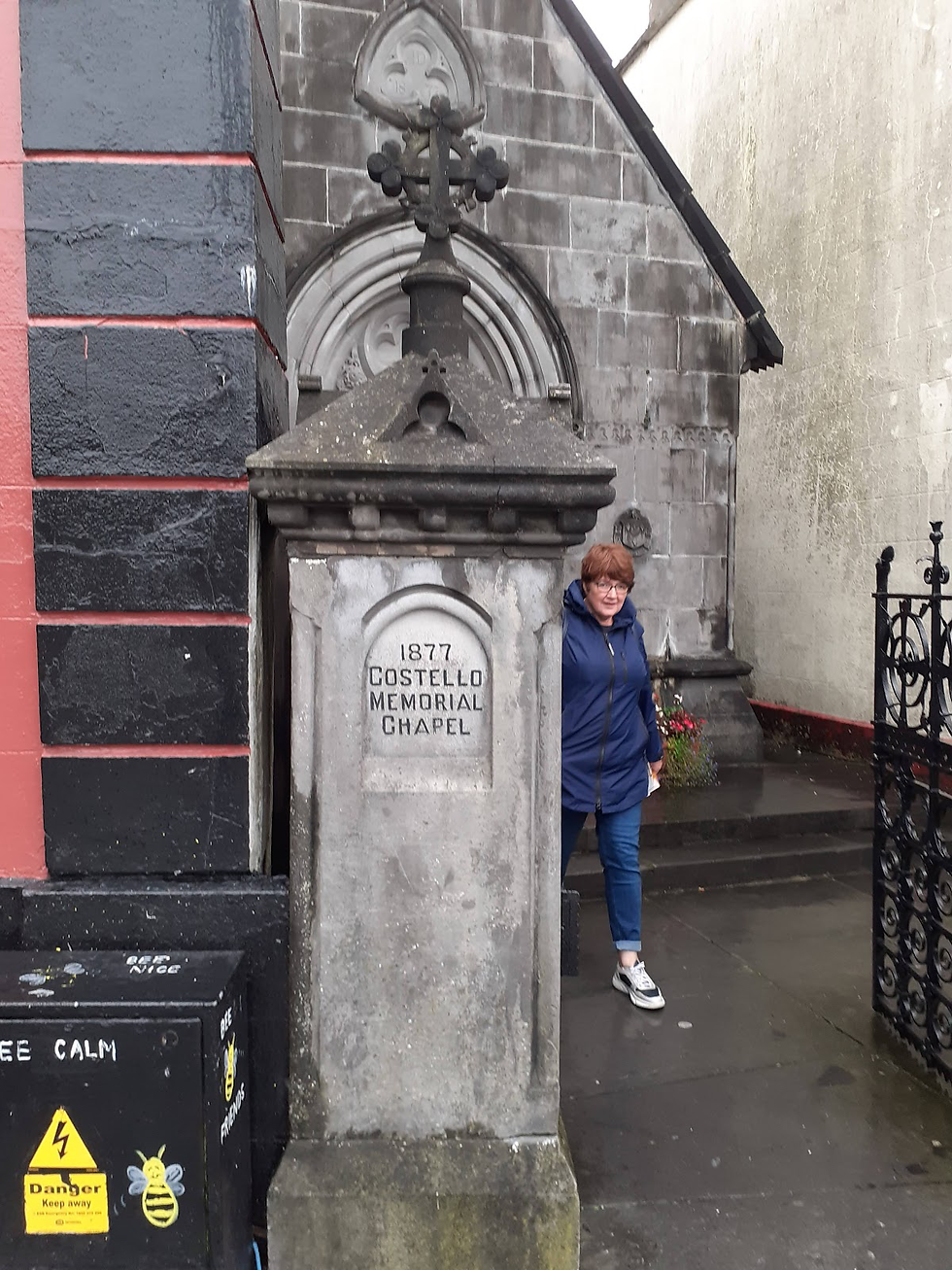
Aqui fica localizada, abafada por construções recentes, a Costello Memorial Chapel, considerada a segunda Capela mais pequena do mundo. Se me perguntarem, não tem nada de notável a não ser pelo facto de ser um acto de amor. Edward Costello mandou-a construir em finais do século XIX, em memória de sua esposa Mary Josephine. Os seus corpos embalsamados, jazem, cobertos por uma laje espessa de vidro, lado a lado, no interior. A poucos metros temos o relógio da cidade, monumento erguido em 1905 em honra de Owen McCann, um proeminente cidadão da cidade e primeiro presidente do Conselho do Condado de Leitrim.


Em Kilmore, tive a oportunidade de visitar o Parke's Castle, que como referi, se encontra majestosamente erigido numa das margens do Lago Gill. É um castelo do século XVII, bem preservado, coisa rara na Irlanda, um bom exemplo de arquitectura renascentista. No seu interior há exposições permanentes e itinerantes que se podem visitar gratuitamente.


A norte, visitei as ruínas do castelo Manorhamilton, que deu nome à vila, fundado entre 1634-36 por Sir Frederick Hamilton, um administrador escocês que desempenhou um papel central na colonização britânica da Irlanda. Esta fortaleza histórica é um testemunho das contínuas tensões e conflitos entre os colonizadores britânicos e os nativos irlandeses durante esse período conturbado da história irlandesa. Resistiu aos ataques durante a Rebelião Irlandesa de 1641, mas foi posteriormente tomado e incendiado pelo Conde de Clanrickard, Ulick Burke, em 1652. Burke, uma figura proeminente da época e aliado da causa realista, ficou conhecido para sempre na história pelas suas campanhas militares em defesa da Irlanda durante os tumultos do século XVII.
Dei, “en passant”, uma espreitadela às ruínas de Creevelea Abbey, na vila de Dromahair. É um convento franciscano que foi fundado em 1508 e utilizado até ao século XVII, quando os franciscanos foram forçados a sair pelo exército de Cromwell.
Levaram-me a Rossinver para fazer um trilho e ver as cataratas. Eu pensei: “wow! Num país com tanta água, devem ser fabulosas!”

Bem… Fowley’s Falls, é um belo lugar…
Não há dúvida que a água cai… mas daí a serem cataratas…


Verdade que a água chega através dos sulcos das montanhas… Mas são apenas uma sequência de pequenas cascatas ou levadas…
Quando me propuseram ir às cataratas de Glencar (Glencar Waterfall), lugar de inspiração do poema de Yeats, “The Stolen Child”, preparei-me para ir, apenas, com o entusiasmo de uma amante de poesia, e sem expectativas, como podem imaginar, em relação à catarata.
Mas vá…
Digam lá se não foi uma cartada inteligente colocar County Leitrim na rota do Wild Atlantic Way!
English Version
Leitrim...

For those unfamiliar with Ireland and looking at a map right now, they might be thinking: "Oops, the lady made a mistake! There's no 'Atlantic' in County Leitrim." Well, the lady did not make a mistake. Indeed, despite not having a sea coast in this county, it is part of the Wild Atlantic Way route...
But what makes Leitrim worthy of being on this iconic route that embraces the west coast of the country?
The Wild Atlantic Way spans a broad coastal area and includes adjacent regions near the coast, contributing to the overall experience of the route. It's a well-thought-out tourism initiative that helps promote tourism in lesser-known areas, encouraging visitors to explore beyond the more traditionally touristy regions along the coast.
While it may lack the crashing waves of the Atlantic against its rocks, what it lacks in coastline is more than compensated by its lush green hills and tranquil lakes. Leitrim offers a tranquility that is rare in busier coastal destinations, inviting exploration beyond salty waters to discover an Ireland that blends rural serenity with historical authenticity.
The lakes of Leitrim include Lough Allen, one of the largest lakes in the region known for its natural beauty and outdoor activities such as fishing and boating. Lough Gill, situated on the border between Leitrim and Sligo, is renowned for its scenic beauty that inspired poet Yeats. Visitors can take boat trips to Innisfree, and there are daily trips from Sligo to Parke's Castle.
Lough Melvin is shared between Leitrim and Fermanagh County in Northern Ireland. It is famous for its biodiversity and offers activities such as river cruises, fishing, and walks along its shores. Also shared by both Irelands is the Global Geopark of Cuilcagh Lakelands. This geopark is an area recognized by UNESCO due to its geological and environmental importance, covering mainly parts of the counties of Fermanagh, Cavan (in the Republic of Ireland), and a small part of Leitrim, with Leitrim not having an entrance to the park.
Therefore, it won't harm you to make a short detour from the Wild Atlantic Way and drive about 40 minutes to County Cavan to visit this park. And since you're there, take a little trip to Northern Ireland because you won't want to miss the famous Cuilcagh Boardwalk trail. This wooden pathway, known as the Cuilcagh Boardwalk, is about 6.5 km long and leads to the final ascent, a steep section of steps locally nicknamed 'The Stairway to Heaven'.
I also highlight Belhavel Lough for its birdwatching spots and unique natural landscape (besides having a tune named after it 😉).
I can tell you that I have been happy in Carrick-on-Shannon, the largest town in Leitrim, situated on the banks of the River Shannon. It's small and known primarily for its water activities such as river cruises both during the day and at night, fishing, and its vibrant cultural life with festivals and events throughout the year.
Here is located, overshadowed by recent constructions, the Costello Memorial Chapel, considered the second smallest chapel in the world. If you ask me, it's not particularly notable except for being a labor of love. Edward Costello had it built in the late 19th century in memory of his wife Mary Josephine. Their embalmed bodies lie side by side under a thick glass slab inside. A few meters away stands the town clock, a monument erected in 1905 in honor of Owen McCann, a prominent town figure and the first chairman of Leitrim County Council.



In Kilmore, I had the opportunity to visit Parke's Castle, which, as I mentioned, is majestically situated on one of the shores of Lough Gill. It's a well-preserved 17th-century castle, a rarity in Ireland, and a fine example of Renaissance architecture. Inside, there are permanent and temporary exhibitions that can be visited free of charge.


To the north, I visited the ruins of Manorhamilton Castle, which gave the village its name. It was founded between 1634-36 by Sir Frederick Hamilton, a Scottish administrator who played a central role in the British colonization of Ireland. This historic fortress is a testament to the ongoing tensions and conflicts between the British colonizers and the native Irish during that turbulent period of Irish history. It withstood attacks during the Irish Rebellion of 1641 but was later taken and burned by the Earl of Clanrickard, Ulick Burke, in 1652. Burke, a prominent figure of the time and an ally of the Irish cause, became forever known in history for his military campaigns in defense of Ireland during the upheavals of the 17th century.
I gave 'en passant' a peek at the ruins of Creevelea Abbey in the village of Dromahair. It's a Franciscan friary founded in 1508 and used until the 17th century when the Franciscans were forced out by Cromwell's army.

Well... Fowley’s Falls is a beautiful place... There's no doubt the water falls... but to call them waterfalls…


True, water flows through the mountain grooves... But they're just a series of small cascades or streams... When I was invited to go to Glencar Waterfall, the inspiration for Yeats' poem "The Stolen Child," I prepared to go with the enthusiasm of a poetry lover, and without expectations, as you can imagine, regarding the waterfall.
But not só bad…
Tell me if it wasn't a smart move to include County Leitrim on the Wild Atlantic Way route!


Eu também, como a nossa anfitriã neste blog, "já fui feliz em Carrick-on-Shannon". Mais uma vez deliciado pela escrita e pela fiel descrição do que é este maravilhoso país que é a Irlanda.