Newcastle
- luaemp
- 10 de ago. de 2025
- 8 min de leitura
(Followed by the English version)

Não sei se já repararam mas é curioso que em terras irlandesas, mesmo as mais pacatas vilas têm sempre algo interessante a revelar. É só preciso persistência e olhos para ver…
Newcastle é uma delas…
Aninhada entre o mar e as montanhas, no condado de Wicklow, a discrição é o seu forte. A vila era parte de uma linha de defesa costeira normanda. O próprio nome “Newcastle” vem da fortaleza que substituiu estruturas mais antigas. Ok… e onde estão as ruínas do castelo? Depois de andar às voltas sem sucesso, decidi guinar para o mar… Uma pausa merecida ajudar-me-ia a recuperar energia e foco, para esta empreitada que não se adivinhava fácil.
Pelo caminho descendente e curvilíneo, lá me ia entretendo com as casas e seus jardins, com o pequeno ribeiro que me acompanhou por quase todo o percurso com o seu levíssimo cantar.
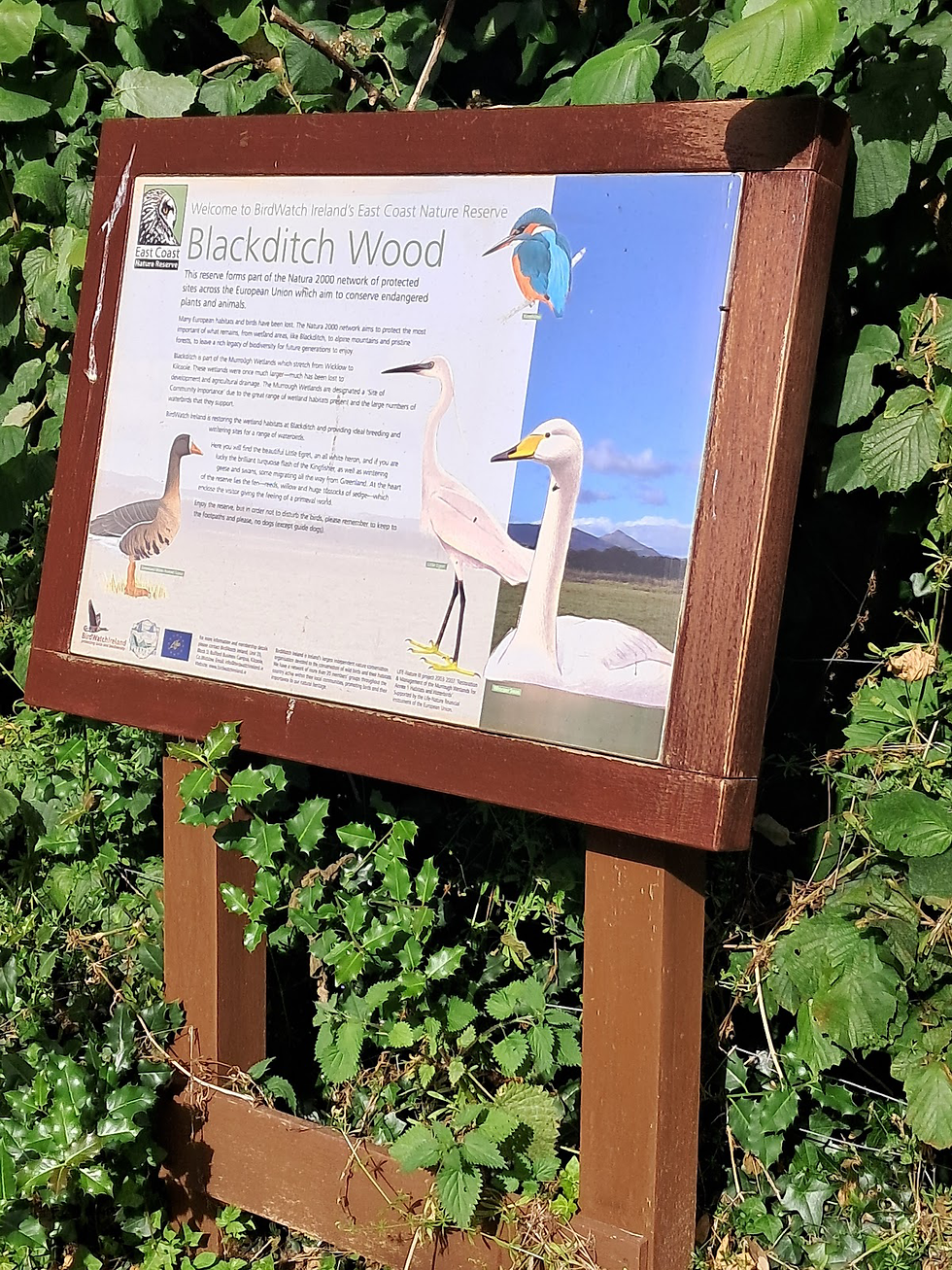
De repente dou de caras com a East Coast Nature Reserve. Tive que entrar e descobrir este tesouro… É considerada uma das mais valiosas reservas de zonas húmidas da Irlanda, servindo de refúgio a dezenas de espécies de aves e plantas. Há trilhos que serpenteiam entre fenos e bosques, passadiços de madeira e silêncio entrecortado apenas pelo canto de um rouxinol-dos-caniços ou pelo esvoaçar de uma borboleta Marsh Fritillary.
Também se observam outras aves, incluindo garças, patos selvagens e, com um pouco de sorte — foi o caso — aves de rapina.
Uma deliciosa e imprevista descoberta…
Após a visita segui caminho.


Um pouco mais abaixo, deparei-me com um pequeno aeródromo privado, licenciado pela Autoridade Irlandesa de Aviação que funciona como escola de pilotagem, com voos de treino e aulas introdutórias para quem sonha levantar voo — literalmente. Talvez um dia me aventure, não como passageira, mas como aprendiz de piloto por uns minutos…

Entretanto, é tempo de seguir caminho.
A praia aconchegada entre rochas, extensa e serena, onde o vento sopra livre e o mar se estende em tons de azul, está logo ali à frente, logo após a linha férrea.


Custa-me sempre virar as costas ao mar mas o raio das ruínas voltaram a vir à tona o que me fez levantar e fazer o trajecto de volta.
Chegando novamente à rua principal, os meus olhos cruzam-se com vários “monumentos” que, embora não tenha encontrado online nenhuma informação sobre eles, lá estão e marcam o lugar. Um deles é uma cápsula do tempo, assinalando a viragem do milénio. Creio que terá sido idealizada pelo Newcastle Foroige Club em colaboração com a Newcastle Historical Society, e está programada para ser aberta a 31 de dezembro de 2029 — possivelmente um marco para a comunidade, que guardará na cápsula memórias e recordações importantes dos últimos mil anos.

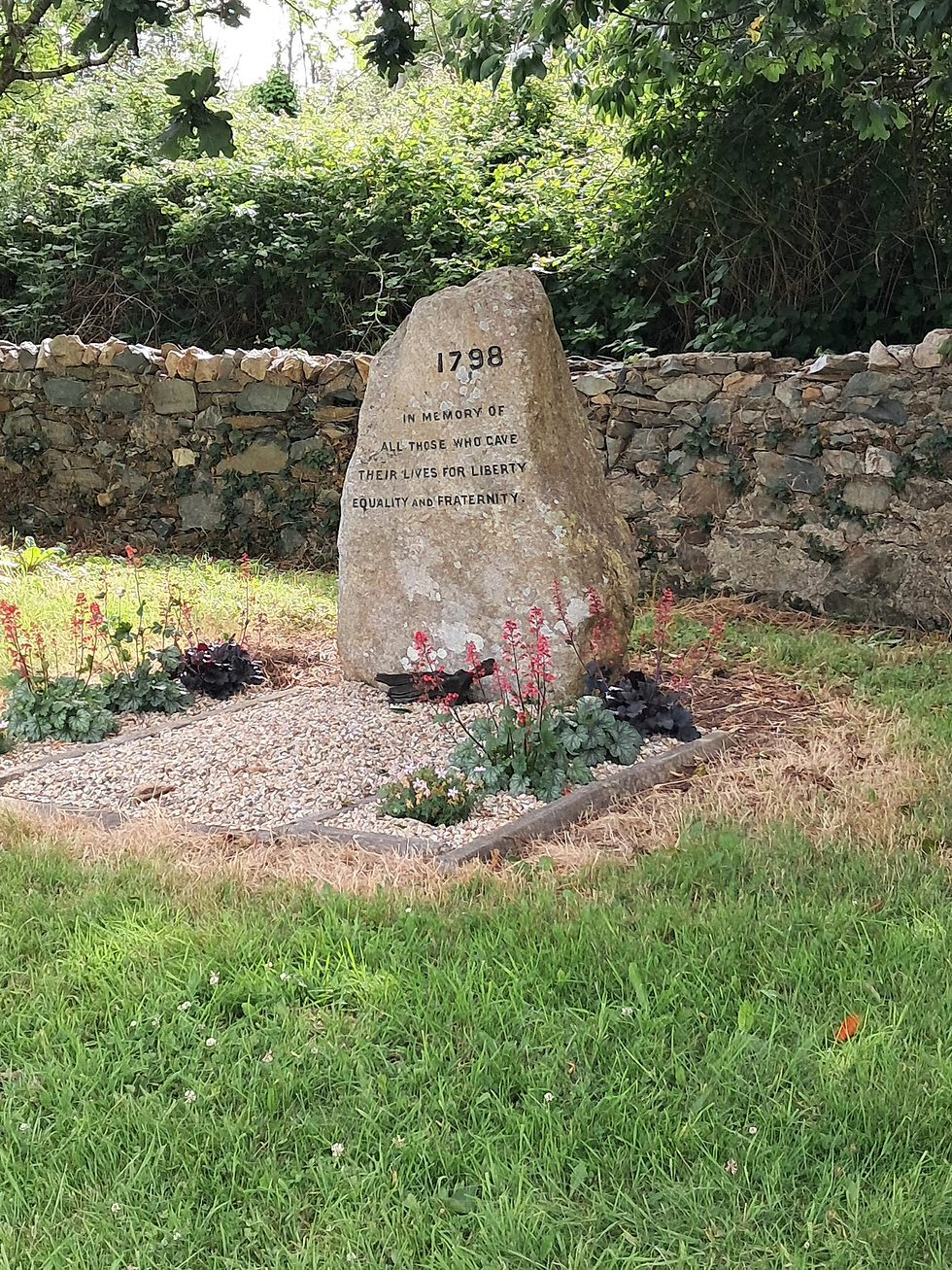
A poucos metros um outro momento, uma outra memória lembrando a data de 1798 e todos aqueles que deram as duas vidas pela “liberdade, igualdade e fraternidade”.
Fui andando, intuindo o caminho… Esta terrível mania de não haver, na maioria dos casos, sinalética que nos guie à História…
Entre ruas desertas lá fotografei alguns pormenores que me iam chamando a atenção.


Até que, finalmente, avistei o raio do castelo!
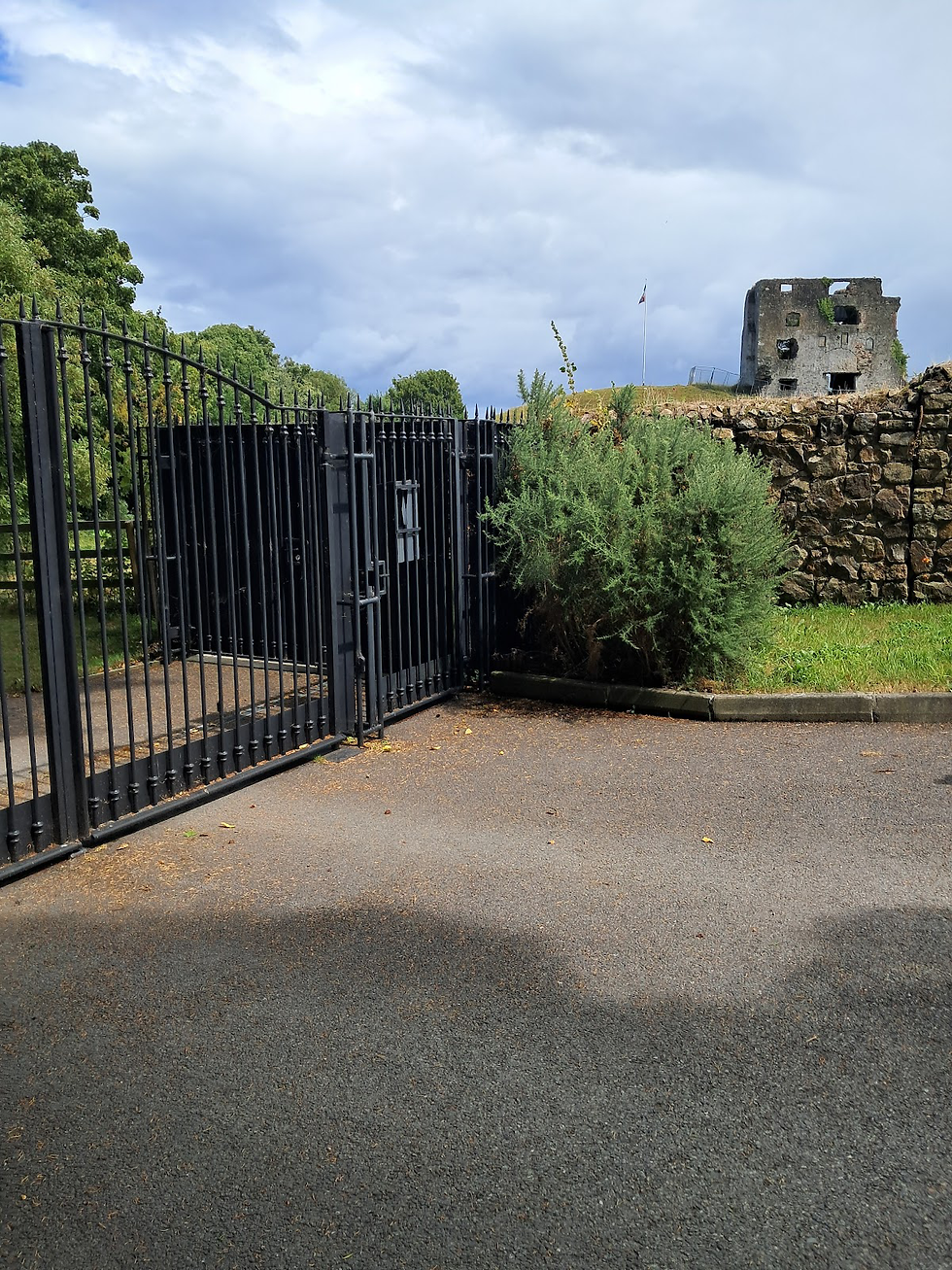
Erguia-se discreto, como quem prefere não dar nas vistas. Nada de torres esvoaçantes ou ameias de postal. Apenas uma estrutura sólida, quase quadrada, de pedra espessa.
Um arco sobrevive sobre a entrada. Lá dentro, o vazio.
O que restou parece mais uma casa fortificada do que um castelo — e talvez seja mesmo. Diz-se que a estrutura visível hoje foi construída já no tempo dos Tudor (sécs. XVI e início do XVII), sobre as fundações do velho castelo normando, mandado erguer por Hugh de Lacy por volta de 1172, um dos principais barões normandos enviados para consolidar o controlo inglês na Irlanda após a invasão. Newcastle tornou-se então uma fortaleza fronteiriça vital, numa região marcada por tensões constantes entre os colonos normandos e os clãs gaélicos, sobretudo os O’Byrne e os O’Toole, que controlavam as montanhas circundantes.
Mas se foi castelo ou casa, pouco importa.
O que sobra, dispõe-se na paisagem com a dignidade da memória — onde até nem um cavalo se inibe de nos reportar a outras eras…



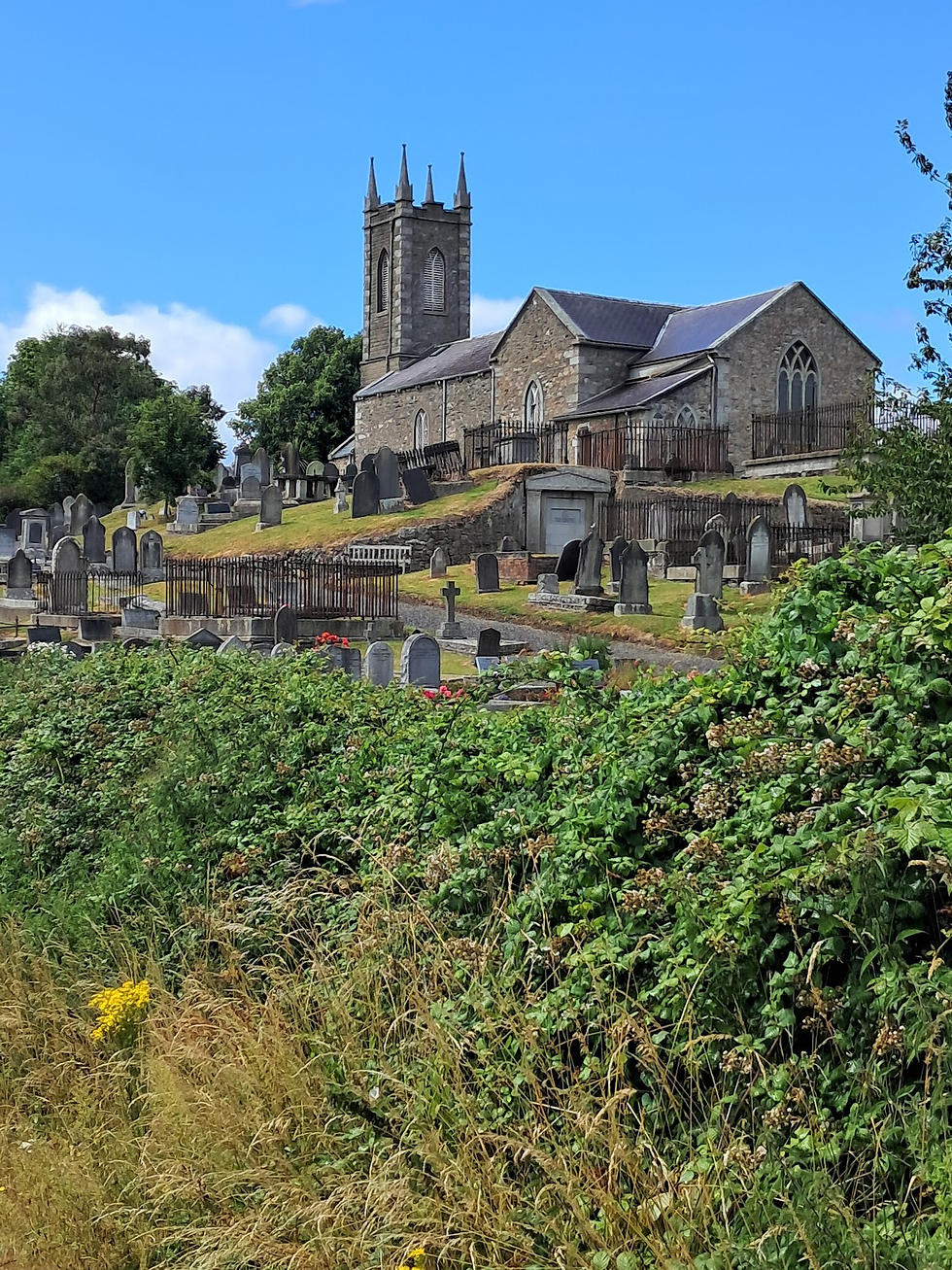
Ao lado ergue-se a igreja anglicana St Matthew’s, construída entre 1783 e 1788 em estilo gótico vernacular típico do programa Board of First Fruits. A torre, com três andares, pináculos angulados e crenelados, foi acrescentada em 1821. Originalmente uma “chapel of ease” (simples capela), foi elevada a igreja paroquial em 1844 e dedicada ao santo em 1895. Rodeada por um pequeno cemitério e ligada à escola local, a igreja permanece na paisagem como testemunho discreto da presença institucional inglesa na região, muitos séculos após o desaparecimento do castelo.


Segui o som da água e encontrei uma pequena ponte de pedra, conhecida como Pack Horse Bridge, construída por volta de 1770, num período em que o transporte de mercadorias era feito sobretudo por animais de carga. Este tipo de ponte permitia que mulas e burros atravessassem cursos de água pouco profundos sem se molharem em excesso ou tropeçarem nas pedras do leito. Dizem ser uma das poucas do género ainda existentes na Irlanda, tendo sido restaurada com o apoio do GLAS Traditional Farm Buildings Scheme. Faz parte do percurso da "Pure Mile”, uma iniciativa comunitária que promove a preservação do património cultural e natural da região.

A exploração do território teria que ser dada por finda em breve… Mas ainda reparei na Old Rectory que terá sido no século XIX a residência clerical e que hoje deve ser uma casa privada que conservará os muros.

Olhei o relógio… Uma meia hora daria para localizar a Old Forge — uma antiga oficina de ferreiro que data do século XVIII, ou até antes, e que permaneceu em actividade até 1960. Mais do que um local de trabalho manual, era um ponto de convívio da comunidade, onde se martelavam ferraduras e se trocavam histórias. A oficina, também integrada no percurso da “Pure Mile”, permanece como um símbolo discreto, mas vivo, do passado rural da vila.

Descansei os olhos numa magnífica colina antes de voltar ao centro da vila… Felizmente o autocarro não demorou muito ou teria ficado ensopada… Lucky me!... O vento empurrou-me para casa mais depressa…

English Version
I don’t know if you’ve noticed, but it’s curious how, even in the quietest Irish villages, there’s always something interesting waiting to be discovered. You just need persistence and an eye to see it…
Newcastle is one of them…
Nestled between the sea and the mountains, in County Wicklow, discretion is its strong suit. The village was once part of a Norman coastal defence line. The very name “Newcastle” comes from the fortress that replaced older structures.
Okay… so where are the castle ruins? After wandering around unsuccessfully, I decided to head towards the sea… A well-deserved break would help me regain energy and focus for this endeavour, which didn’t promise to be easy.
On the winding downward path, I kept myself entertained by the houses and their gardens, and by the small stream that accompanied me for almost the entire way with its gentle murmur.
Suddenly, I came face to face with the East Coast Nature Reserve. I had to go in and discover this treasure… It’s considered one of the most valuable wetland reserves in Ireland, serving as a refuge for dozens of species of birds and plants. There are trails winding through meadows and woods, wooden boardwalks, and silence broken only by the song of a reed warbler or the flutter of a Marsh Fritillary butterfly.
Other birds can also be spotted, including herons, wild ducks and, with a bit of luck — as was the case — birds of prey.
A delightful and unexpected discovery…
After the visit, I carried on my way.



A little further down, I came across a small private aerodrome, licensed by the Irish Aviation Authority, which operates as a flying school offering training flights and introductory lessons for those who dream of taking to the skies — quite literally. Maybe one day I’ll dare to try, not as a passenger, but as a trainee pilot for a few minutes…

Meanwhile, it was time to carry on.
The beach, nestled between rocks, wide and peaceful, where the wind blows free and the sea stretches out in shades of blue, lay just ahead, just beyond the railway line.


I always find it hard to turn my back on the sea, but those blasted ruins kept coming back to mind, so I got up and retraced my steps.
Back on the main street, my eyes fell on several “monuments” which, although I couldn’t find any information about them online, are there nonetheless, marking the place. One of them is a time capsule, commemorating the turn of the millennium. I believe it was created by the Newcastle Foroige Club in collaboration with the Newcastle Historical Society, and is scheduled to be opened on 31 December 2029 — possibly a landmark for the community, preserving memories and important keepsakes from the past thousand years.

Just a few metres away, another moment, another memory — recalling the year 1798 and all those who gave their two lives for “liberty, equality and fraternity.”

I kept walking, following my instincts… This dreadful habit of having, in most cases, no signs to guide us to History…
Along the deserted streets, I took photos of a few details that happened to catch my eye.


Until finally, I caught sight of the blasted castle!
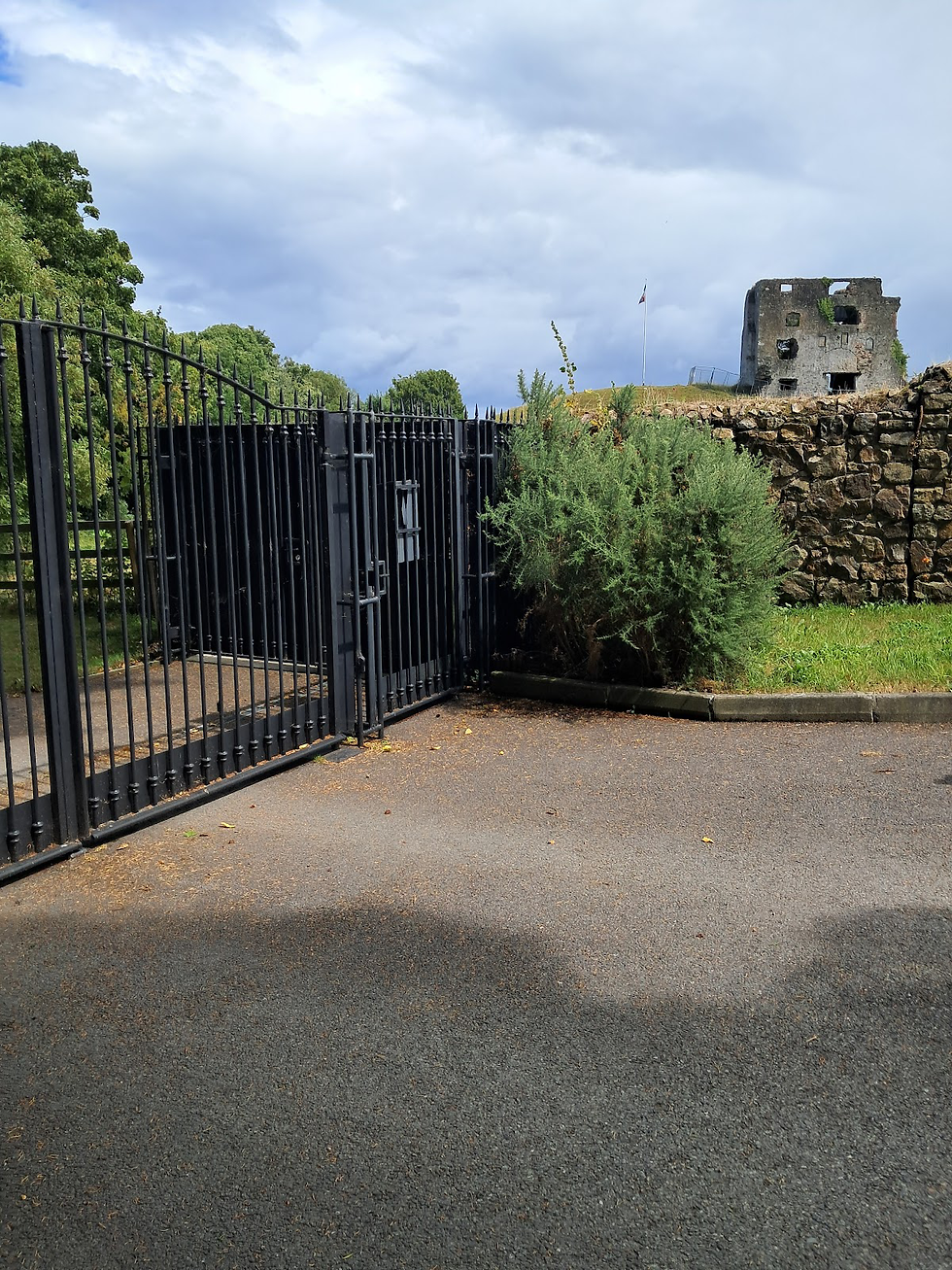
It stood quietly, as if preferring not to draw attention. No soaring towers or postcard battlements—just a solid, almost square structure of thick stone.
An arch still survives above the entrance. Inside, emptiness.
What remains looks more like a fortified house than a castle — and perhaps that’s exactly what it is. It’s said that the visible structure today was built during the Tudor period (16th to early 17th centuries), atop the foundations of the old Norman castle, commissioned by Hugh de Lacy around 1180, one of the principal Norman barons sent to consolidate English control in Ireland after the invasion. Newcastle then became a vital frontier fortress in a region marked by constant tension between Norman settlers and Gaelic clans, especially the O’Byrnes and the O’Tooles, who controlled the surrounding mountains.
But whether it was a castle or a house matters little.
What remains commands its place in the landscape with the dignity of memory — where even a horse doesn’t hesitate to remind us of other times…



Next to it stands the Anglican church of St Matthew’s, built between 1783 and 1788 in the vernacular Gothic style typical of the Board of First Fruits scheme. The tower, with three storeys, angled pinnacles and battlements, was added in 1821. Originally a chapel of ease, it was elevated to parish church status in 1844 and dedicated to the saint in 1895. Surrounded by a small graveyard and linked to the local school, the church remains a discreet testament to the English institutional presence in the region, many centuries after the castle vanished.


I followed the sound of water and came across a small stone bridge known as the Pack Horse Bridge, built around 1770, at a time when goods were mainly transported by pack animals. This type of bridge allowed mules and donkeys to cross shallow streams without getting too wet or stumbling over stones in the riverbed. It is said to be one of the few of its kind still surviving in Ireland, having been restored with support from the GLAS Traditional Farm Buildings Scheme. It forms part of the “Pure Mile” route, a community initiative promoting the preservation of the region’s cultural and natural heritage.

The exploration of the area would soon have to come to an end… But I still noticed the Old Rectory, which was likely the clerical residence in the 19th century and today is probably a private house that has kept its walls intact.

I glanced at my watch… Half an hour would be enough to find the Old Forge — an old blacksmith’s workshop dating back to the 18th century, or possibly earlier, which remained in operation until 1960. More than just a manual workshop, it was a community gathering point where horseshoes were hammered and stories exchanged. The forge, also part of the ‘Pure Mile’ trail, remains a quiet yet vivid symbol of the village’s rural past.

I rested my eyes on a magnificent hill before heading back to the village centre… Luckily, the bus didn’t take long or I would have ended up drenched… Lucky me! The wind pushed me home faster…


Comentários