Newtownmountkennedy
- luaemp
- 17 de ago. de 2025
- 7 min de leitura
(Followed by the English version)

Newtownmountkennedy (Baile an Chinnéidigh, “cidade dos Kennedy”) — Newtown, para os amigos — é um dos nomes mais compridos da Irlanda, com 19 letras, difícil de dizer mas fácil de gostar. Entre montes e campos, respira uma calma que parece saída de outro tempo. A meio caminho entre Dublin e as Montanhas de Wicklow, é fácil passar por Newtown sem grande cerimónia — e, no entanto, há nela uma honestidade rural e uma simplicidade que merecem uma pausa.
O nome vem de uma família com raízes profundas na zona — os Kennedy — que deram origem à Mount Kennedy House, uma mansão georgiana do século XVIII que ainda hoje domina discretamente o monte onde a vila nasceu.
O projecto original foi elaborado por James Wyatt em 1772 e posteriormente concluído, entre 1784 e 1785, por Thomas Cooley — dois nomes de peso na arquitectura do período georgiano.

(Imagem retirada de Farmers Journal)
Os Kennedy foram uma família irlandesa, protestante, estabelecida em Wicklow desde o início do século XVII. Estavam ligados à coroa inglesa, ocupando assento no Parlamento irlandês (Irish House of Commons) e cargos na administração colonial. Sir Robert Kennedy foi feito baronete em 1666 por Carlos II — um título hereditário britânico, inferior a barão mas superior a cavaleiro, que conferia prestígio sem pertença à Câmara dos Lordes.
Embora a casa esteja fechada ao público, a sua presença dá eco à origem de tudo isto: uma vila criada junto à propriedade senhorial, num tempo em que o campo se organizava em função das grandes casas. E ainda hoje se sente esse rasto — nos muros de pedra, nas igrejas modestas, nos nomes das ruas e nos caminhos antigos que rasgam os campos.
No centro, um pub, Mount Kennedy Inn, não deixa cair no esquecimento o nome que fundou a vila.


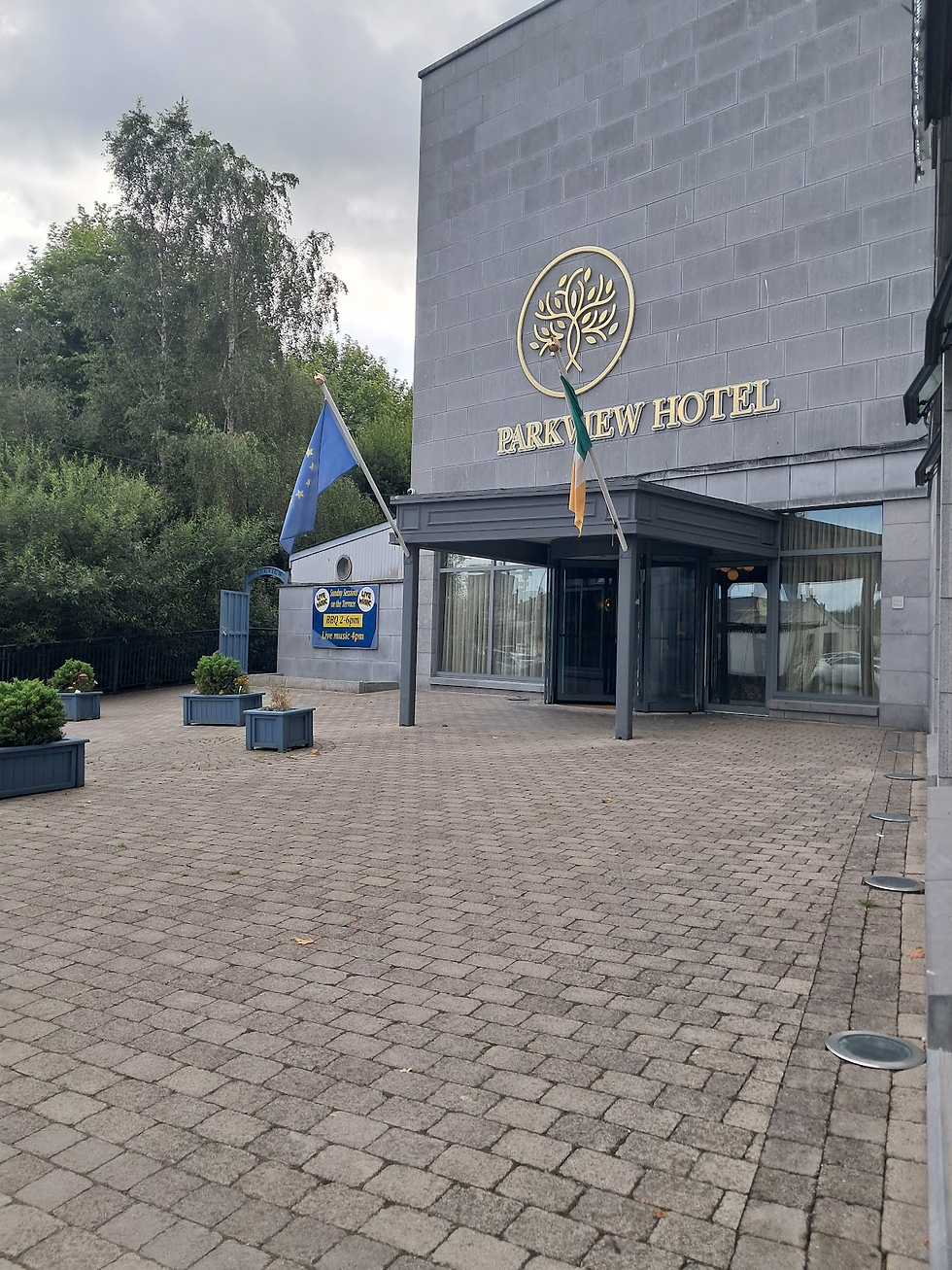
À volta, cafés tranquilos, um centro comercial, um hotel que chama à atenção ou a loja de artesanato local onde cada peça tem nome e história, dão-nos a sensação de que o tempo aqui se acomoda devagar.


Depois há as igrejas, a St. Joseph’s Church é a capela católica da vila, construída aproximadamente em 1865 num estilo Gótico Revival, com estrutura em basalto e acabamentos em granito, planta cruciforme (em forma de T) e janelas em lanceta.


E, claro, a protestante, a igreja de St. Matthew’s (Church of Ireland), construída entre 1832 e 1837 como chapel of ease para servir a população crescente de Newtownmountkennedy, já que a igreja principal em Newcastle não tinha capacidade suficiente. O terreno foi doado por Robert Gun Cuninghame, e embora as celebrações tenham começado em 1835, a consagração oficial só ocorreu em 22 de setembro de 1895.


Um monumento discreto reteve a minha atenção… Fui investigar…

Robert Monteith (1878–1956) nasceu em Newtownmountkennedy, numa família protestante enraizada na região. Serviu no exército britânico na Índia e na Guerra dos Bóeres, mas abandonou a carreira militar antes da Primeira Guerra Mundial. Revoltado com a repressão violenta da greve de 1913 em Dublin, juntou-se aos Irish Volunteers e destacou-se rapidamente como instrutor militar.
Em 1915, foi enviado para a Alemanha, onde colaborou com Roger Casement na formação da Irish Brigade, composta por prisioneiros de guerra irlandeses. Dias antes da Revolta da Páscoa de 1916, desembarcou clandestinamente com Casement na costa de Kerry, a partir de um submarino alemão, numa operação fracassada que levou à captura de Casement. Monteith conseguiu escapar e mais tarde refugiou-se nos Estados Unidos, onde continuou a trabalhar pela causa da independência irlandesa. Publicou memórias e também poesia — mais ligada ao seu percurso político do que por ambição literária.
Faleceu em Detroit, Michigan, mas é lembrado em Newtownmountkennedy com este monumento e em cerimónias anuais.
A poucos minutos do centro, há experiências inesperadas: passeios com alpacas nos campos da K2, provas de vinhos de fruta na pequena Wicklow Way Winery ou sessões de tiro ao prato no Hilltop Shooting Club. Para quem procura luxo tranquilo, o Druids Glen Resort oferece um campo de golfe premiado, spa e trilhos para perder a cabeça — ou encontrá-la.
Há ainda o Fishers of Newtownmountkennedy que ocupa o antigo edifício escolar da vila e se transformou num espaço de moda, arte, presentes e hospitalidade genuína. A marca de família, fundada em 1979, manteve a essência comunitária, combinando peças bem escolhidas com atendimento personalizado.

No piso térreo, o Food at Fishers Café é um café premiado onde tudo é feito no local — dos bolos aos sanduíches, usando ingredientes regionais sempre que possível. Ideal para brunch ou uma pausa gourmet entre passeios, destaca-se pelo cardápio variado, pela atenção a alergias (incluindo opções sem glúten bem tratadas) e pelo ambiente acolhedor. Um ponto forte para quem visita Newtownmountkennedy.


Para os cinéfilos — e para os que não são — saibam que Newtownmountkennedy entra no roteiro do Excalibur Drive, a rota cinematográfica que percorre cenários usados em Excalibur (1981) e Into the West (1993). Mesmo sem ter sido palco de filmagens, a vila faz parte deste percurso visual e geográfico que revela o encanto de Wicklow no grande ecrã. Pode até ser o ponto de partida ideal para esta viagem, ligando a sua calma rural às magníficas paisagens que combinam montanhas, lagos e florestas, que marcaram o cinema. Diga-se que Excalibur tem uma cena memorável no Castelo de Cahir, em Tipperary — mas esse não está nesta rota, logo é outra conversa.

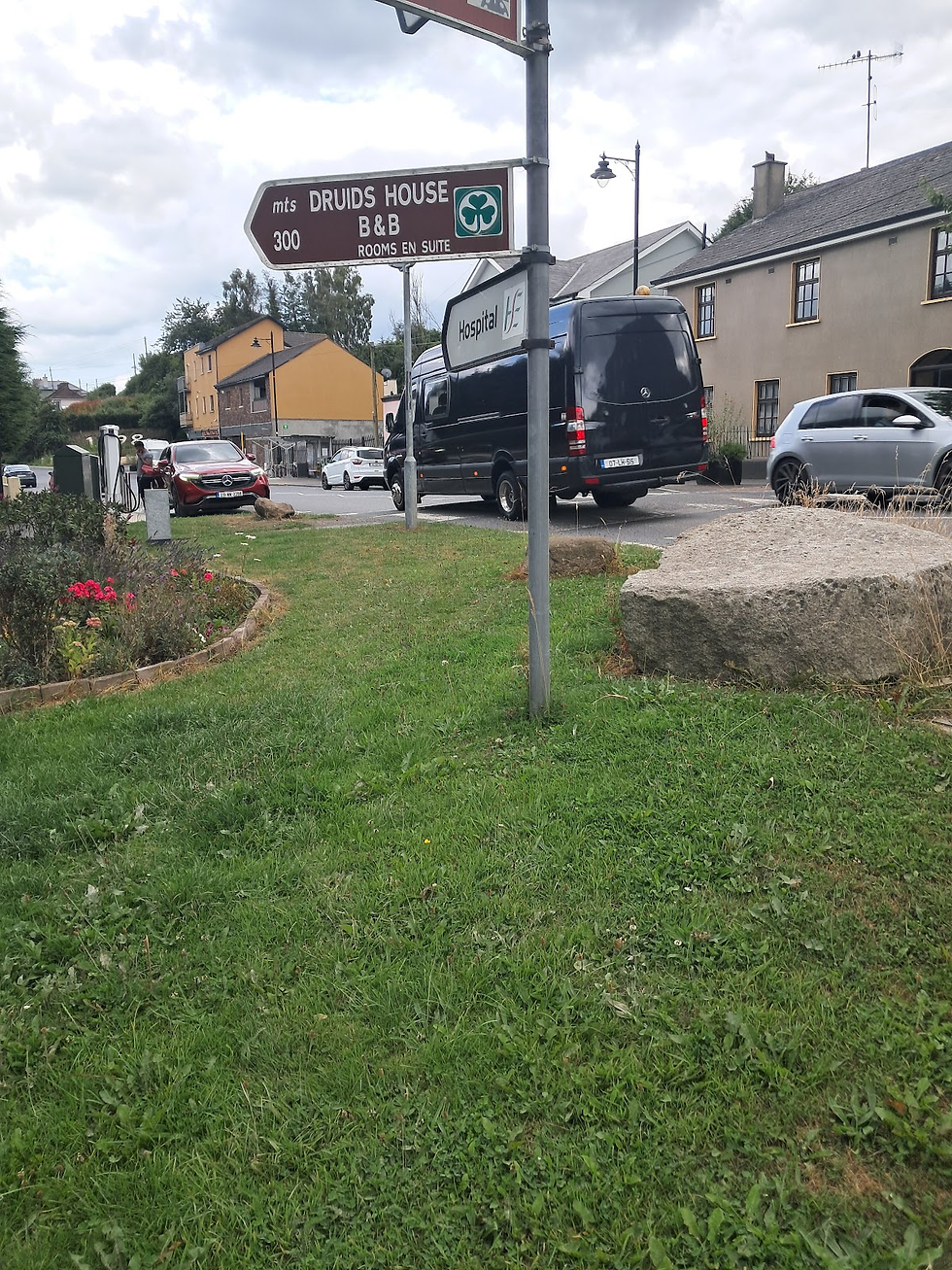
Uma nota, agora que dou por mim a partilhar sinalética: nunca confiem nas indicações destas placas, a maioria das vezes apontam para o lado oposto…
E agora sim, posso finalizar de consciência tranquila talvez com um recanto que cativou a minha atenção enquanto esperava o autocarro…

English Version
Newtownmountkennedy (Baile an Chinnéidigh, “town of the Kennedys”) — or just Newtown, to its friends — is one of the longest place names in Ireland, with 19 letters, hard to pronounce but easy to like. Set among hills and fields, it breathes a calm that seems to belong to another time. Halfway between Dublin and the Wicklow Mountains, it’s easy to drive through Newtown without much ceremony — and yet, there’s a rural honesty and a disarming simplicity here that deserves a pause.
The name comes from a family with deep roots in the region — the Kennedys — who built Mount Kennedy House, an 18th-century Georgian mansion that still discreetly crowns the hill where the village was born.
The original project was designed by James Wyatt in 1772 and later completed, between 1784 and 1785, by Thomas Cooley — two key names in Georgian architecture.

(Image taken from Farmers Journal)
The Kennedys were an Irish Protestant family, settled in Wicklow since the early 17th century. They were tied to the English Crown, held seats in the Irish Parliament (Irish House of Commons) and occupied positions in colonial administration. Sir Robert Kennedy was made a baronet in 1666 by Charles II — a British hereditary title, ranked below baron but above knight, conferring prestige without a seat in the House of Lords.
Although the house is closed to the public, its presence still echoes the origin of it all: a village created beside a landed estate, in a time when the countryside was shaped by great houses. And you still feel that trace — in the stone walls, the modest churches, the street names, and the old paths running through the fields.
At the centre of the village, a pub — Mount Kennedy Inn — keeps the name that founded the town alive.


Surrounding it are quiet cafés, a shopping centre, a hotel that doesn’t go unnoticed, and a local crafts shop where every piece seems to carry a name and a story — giving the impression that time, here, settles slowly.


Then come the churches.St. Joseph’s Church is the village’s Catholic chapel, built around 1865 in a Gothic Revival style, with basalt structure, granite finishes, a cruciform layout (T-shaped), and lancet windows.


And, of course, the Protestant one — St. Matthew’s Church (Church of Ireland), built between 1832 and 1837 as a chapel of ease to serve Newtownmountkennedy’s growing population, since the main church in Newcastle couldn’t hold them all. The land was donated by Robert Gun Cuninghame, and although services began in 1835, it wasn’t officially consecrated until 22 September 1895.


A discreet monument caught my attention… I looked into it…

Robert Monteith (1878–1956) was born in Newtownmountkennedy, into a Protestant family rooted in the region. He served in the British army in India and the Boer War, but left military life before World War I. Outraged by the brutal suppression of the 1913 Dublin lockout, he joined the Irish Volunteers and quickly stood out as a military instructor.
In 1915, he was sent to Germany to work with Roger Casement in forming the Irish Brigade — composed of Irish POWs. Days before the 1916 Easter Rising, he landed secretly with Casement on the Kerry coast, from a German submarine, in a failed operation that led to Casement’s capture. Monteith escaped, eventually making his way to the U.S., where he continued advocating for Irish independence. He published memoirs — and poetry, more tied to his political path than literary ambition.
He died in Detroit, Michigan, but is remembered in Newtownmountkennedy with this monument and through annual commemorations.
And just a few minutes from the village centre, you stumble on some surprises: alpaca walks through K2 fields, fruit wine tastings at the small Wicklow Way Winery, or clay pigeon shooting at Hilltop Shooting Club. For those seeking quiet luxury, the Druids Glen Resort offers an award-winning golf course, a spa, and trails to either lose your head — or find it again.

Also worth noting is Fishers of Newtownmountkennedy, which now occupies the village’s former schoolhouse and has become a space for fashion, art, gifts, and genuine hospitality. This family-run business, founded in 1979, has held on to its community spirit, blending well-chosen items with warm, personal service.

Downstairs, Food at Fishers Café is an award-winning spot where everything is made on-site — from cakes to sandwiches — using local ingredients whenever possible. Perfect for brunch or a gourmet pause mid-wander, it stands out for its varied menu, allergy awareness (including properly treated gluten-free options), and a welcoming atmosphere. A strong highlight for any visitor to Newtownmountkennedy.


And for the cinephiles — or even if you’re not — know that Newtownmountkennedy is part of the Excalibur Drive, a film trail that follows locations used in Excalibur (1981) and Into the West (1993). Though no scenes were shot in the village itself, it belongs to this cinematic and geographic route that reveals the magic of Wicklow on the big screen.
In fact, Excalibur includes a memorable scene at Cahir Castle, in Tipperary — though that’s not on this route, so we’ll leave that for another story.

And one note, since I found myself photographing signposts: never trust these signs — they often point the wrong way…
And now, yes, I can finally wrap up with a clear conscience, perhaps with a little spot that caught my attention while I was waiting for the bus…


Comentários