Ressurreição de... Tradições/ Resurrection of... Traditions
- luaemp
- há 7 horas
- 7 min de leitura
(Followed by the English version)
Desenganem-se aqueles que estavam à espera de um post sobre a crucificação e ressurreição do Senhor…
Sim, a Irlanda é um país fervorosamente católico e tem todos os rituais desta época bem apurados, desde a quaresma, ao cabrito, dos ovos de chocolate aos coelhos da Páscoa — que diga-se de passagem nunca percebi onde entram.
Escrevo antes sobre coisas mais antigas e curiosas, enraizadas no folclore, mas que caíram em desuso. Pena!
Por exemplo, existia uma tradição irlandesa chamada Whipping the Herring, praticada sobretudo em cidades costeiras, em que um arenque era levado em procissão pelas ruas no fim da Quaresma. Música, brincadeiras e muito humor acompanhavam o ritual: as pessoas batiam no peixe e, no final, muitas vezes lançavam-no num rio, simbolizando o fim do jejum de peixe e a chegada da Páscoa. Metaforicamente, era como se os irlandeses realizassem um “funeral simbólico” do jejum, felizes por finalmente poderem voltar a comer carne.
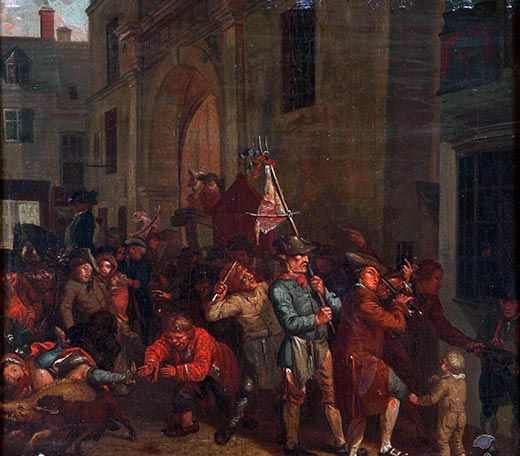
O costume foi até documentado numa pintura de Nathaniel Grogan, intitulada “Whipping the Herring Out of Town – A Scene of Cork” (cerca de 1800), que retrata visualmente o evento no contexto urbano da época e nos dá uma janela viva para o humor e a teatralidade desta tradição folclórica.
Pancadas no arenque e procissões à parte, noutras partes da Irlanda, sobretudo no condado de Wexford, os ovos eram o centro das atenções. Aqui existiam — e em algumas comunidades ainda sobrevivem — duas tradições pascais distintas, embora ligadas pelo mesmo fio condutor: o ovo como símbolo do fim da abstinência — o gugging for eggs e o clúdóg.
O gugging for eggs deve o seu nome a um termo coloquial para ovo (gug ou guggy egg), e toda a prática se enraizava directamente no fim do jejum da Quaresma. No Sábado Santo — ou, por vezes, na Segunda-feira de Páscoa — as crianças saíam de casa vestidas com roupas velhas, aventais, cestos e, não raras vezes, máscaras, percorrendo ruas e aldeias numa espécie de peditório ritualizado. Paravam às portas, batiam, esperavam, e repetiam expressões como “Me Aester (Easter) egg on you?” ou “Eggs or money, mam?”, numa cadência que misturava insistência e brincadeira. Em troca, recebiam ovos que não tinham podido comer durante semanas — pequenos gestos de dádiva que, acumulados ao longo do dia, transformavam a escassez da Quaresma numa promessa concreta de abundância.
O clúdóg, por sua vez — termo irlandês que designa um convívio ou piquenique ao ar livre — surgia muitas vezes como prolongamento deste ritual, ainda que sem forma fixa ou obrigatória. Terminado o peditório, grupos de crianças — por vezes acompanhadas por famílias — reuniam-se para cozinhar e partilhar os ovos, aproveitando o que tinham conseguido reunir. Não havia grande formalidade: improvisava-se o espaço, acendia-se um lume, organizava-se a refeição com o que houvesse à mão. Mais do que a comida em si, importava o gesto de a preparar e consumir em conjunto, prolongando o momento para além da recolha.
Havia conversas animadas, risos e aquela satisfação simples de participar em algo colectivo, sem grande aparato mas com significado. Aqui o espírito era social, com direito a alguma diversão e, provavelmente, a mais do que um sorriso de contentamento — mostrando como, desde pelo menos o século XIX, a Páscoa rural irlandesa combinava humor, criatividade e convívio, numa forma muito própria de celebrar a passagem do jejum para a festa.
VÍDEO
Enquanto em Wexford a Páscoa se vivia sobretudo através do convívio e da recolha dos ovos, noutras regiões da Irlanda a época ganhava forma em rituais que misturavam devoção, crenças populares e cuidados com a vida quotidiana. Na Sexta‑feira Santa, muitas famílias preparavam o sal abençoado que lhes seria dado na igreja ou abençoado em casa. Guardado em pequenos sacos ou frascos, o sal era manuseado com reverência: mulheres e homens polvilhavam-no sobre os ovos que seriam comidos no Domingo de Páscoa, enquanto alguns agricultores passavam-no sobre o gado, num gesto que misturava devoção e crença popular. O ritual tinha a cadência própria de cada comunidade: rezas murmuradas, preces sussurradas junto ao lume ou à mesa da cozinha, enquanto o sal era espalhado com cuidado, como se cada grão pudesse carregar a bênção. Este costume, registado sobretudo nos séculos XIX e XX, mantinha-se na memória em algumas aldeias rurais, mas hoje é quase exclusivamente lembrado através de entrevistas com antigos habitantes.
Noutras localidades, a Sexta‑feira Santa conduzia crianças e adultos a poços sagrados (Holy Wells) dispersos pelo campo. Caminhando por trilhos enlameados e atravessando pequenas pontes de madeira, transportavam cestos e garrafas para recolher a água considerada curativa apenas nesse dia. As famílias encostavam-se às margens dos poços, mergulhavam as mãos, enchiam os recipientes com cuidado e murmuravam preces, muitas vezes acompanhadas de cantos suaves ou murmúrios de protecção. A água era depois levada para casa, espalhada pela cozinha, pelos quartos ou junto ao gado, com a crença de que traria saúde, sorte e protecção durante o ano. Estas práticas eram comuns até finais do século XIX. Hoje são apenas histórias que nos chegam em livros e recriações culturais modernas, muito raramente observadas como costumes colectivos vivos.
E é isto… Eu adoro ressuscitar coisas esquecidas — não arenques, mas histórias. Histórias que vivem entre pequenas loucuras, risos roubados e tradições improváveis, e que de alguma forma continuam a encantar quem as encontra.
Olhem, é a minha cruz…
Boa Páscoa!
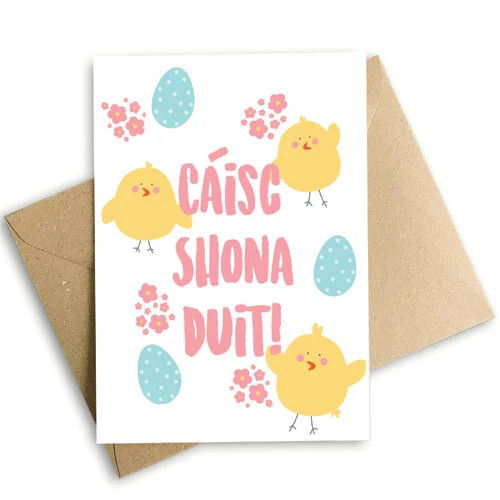
Ou, como se diz por cá: Beannachtaí na Cásca (Bênçãos de Páscoa) ou Cáisc Shona Duit (Feliz Páscoa para ti).
English version
If you were expecting a post about the crucifixion and resurrection of the Lord… think again.
Yes, Ireland is a fervently Catholic country, and it observes all the rituals of this season with great care — from Lent to roast goat, from chocolate eggs to Easter bunnies — which, incidentally, I’ve never quite understood where they fit in.
Instead, I write about older, more curious things, rooted in folklore but now fallen out of use. A pity!
For example, there was an Irish tradition called Whipping the Herring, practiced mainly in coastal towns, in which a herring was carried in procession through the streets at the end of Lent. Music, playfulness, and plenty of humor accompanied the ritual: people would strike the fish, and in the end, it was often thrown into a river, symbolizing the end of the fish fast and the arrival of Easter. Metaphorically, it was as if the Irish were holding a “symbolic funeral” for fasting, delighted to finally be able to eat meat again.
The custom was even documented in a painting by Nathaniel Grogan, titled “Whipping the Herring Out of Town – A Scene of Cork” (circa 1800), which vividly portrays the event in its urban setting and offers a lively window into the humor and theatricality of this folkloric tradition.

Herring beatings and processions aside, in other parts of Ireland — especially in County Wexford — eggs took center stage. Here, there existed — and in some communities still survive — two distinct Easter traditions, though connected by the same common thread: the egg as a symbol of the end of abstinence—the gugging for eggs and the clúdóg.
Gugging for eggs takes its name from a colloquial term for egg (gug or guggy egg), and the whole practice was directly rooted in the end of the Lenten fast. On Holy Saturday — or sometimes on Easter Monday — children would leave their homes dressed in old clothes, aprons, carrying baskets and, not infrequently, wearing masks, roaming through streets and villages in a kind of ritualized begging round. They would stop at doors, knock, wait, and repeat phrases such as “Me Aester (Easter) egg on you?” or “Eggs or money, mam?”, in a rhythm that blended persistence with playfulness. In return, they received eggs they had been unable to eat for weeks — small acts of giving which, accumulated over the course of the day, transformed the scarcity of Lent into a tangible promise of abundance.
The clúdóg, in turn — an Irish term referring to a social gathering or outdoor picnic — often emerged as an extension of this ritual, though without any fixed or prescribed form. Once the collecting was over, groups of children — sometimes joined by their families — would gather to cook and share the eggs, making use of whatever they had managed to collect. There was little formality: the setting was improvised, a fire would be lit, and the meal arranged with whatever happened to be at hand. More than the food itself, what mattered was the act of preparing and consuming it together, prolonging the moment beyond the collection itself.
There were lively conversations, laughter, and that simple satisfaction of taking part in something collective—unpretentious, yet meaningful. Here, the spirit was social, with room for a bit of fun and, no doubt, more than a few contented smiles—showing how, since at least the nineteenth century, rural Irish Easter blended humor, creativity, and conviviality in its own distinctive way of marking the passage from fasting to festivity.
VÍDEO
While in Wexford Easter was experienced primarily through sociability and the gathering of eggs, in other regions of Ireland the season took shape through rituals that blended devotion, folk beliefs, and care for everyday life. On Good Friday, many families prepared the blessed salt that would be given to them at church or blessed at home. Kept in small bags or jars, the salt was handled with reverence: women and men would sprinkle it over the eggs to be eaten on Easter Sunday, while some farmers would pass it over their livestock, in a gesture that combined devotion and popular belief. The ritual followed the rhythm of each community: murmured prayers, quiet supplications by the hearth or at the kitchen table, as the salt was carefully scattered, as though each grain might carry the blessing.
This custom, recorded primarily in the nineteenth and twentieth centuries, lingered in the memory of some rural villages, but today it is remembered almost exclusively through interviews with former inhabitants.
In other localities, Good Friday led children and adults alike to sacred wells (Holy Wells) scattered across the countryside. Walking along muddy paths and crossing small wooden bridges, they carried baskets and bottles to collect water believed to hold healing properties only on that day. Families would gather at the edges of the wells, dipping their hands into the water, carefully filling their containers, and murmuring prayers — often accompanied by soft chants or whispered words of protection.
The water was then taken home and sprinkled in kitchens, bedrooms, or over livestock, in the belief that it would bring health, luck, and protection throughout the year. These practices were common until the late nineteenth century. Today, they survive mostly as stories preserved in books and in modern cultural recreations, only very rarely observed as living, collective traditions.
And that’s it… I do love bringing forgotten things back to life—not herrings, but stories. Stories that live somewhere between small absurdities, stolen laughter, and unlikely traditions, and that somehow continue to charm those who come across them.
Well, that’s my cross to bear…
Happy Easter!
Or, as we say around here: Beannachtaí na Cásca (Easter blessings) or Cáisc


Comentários